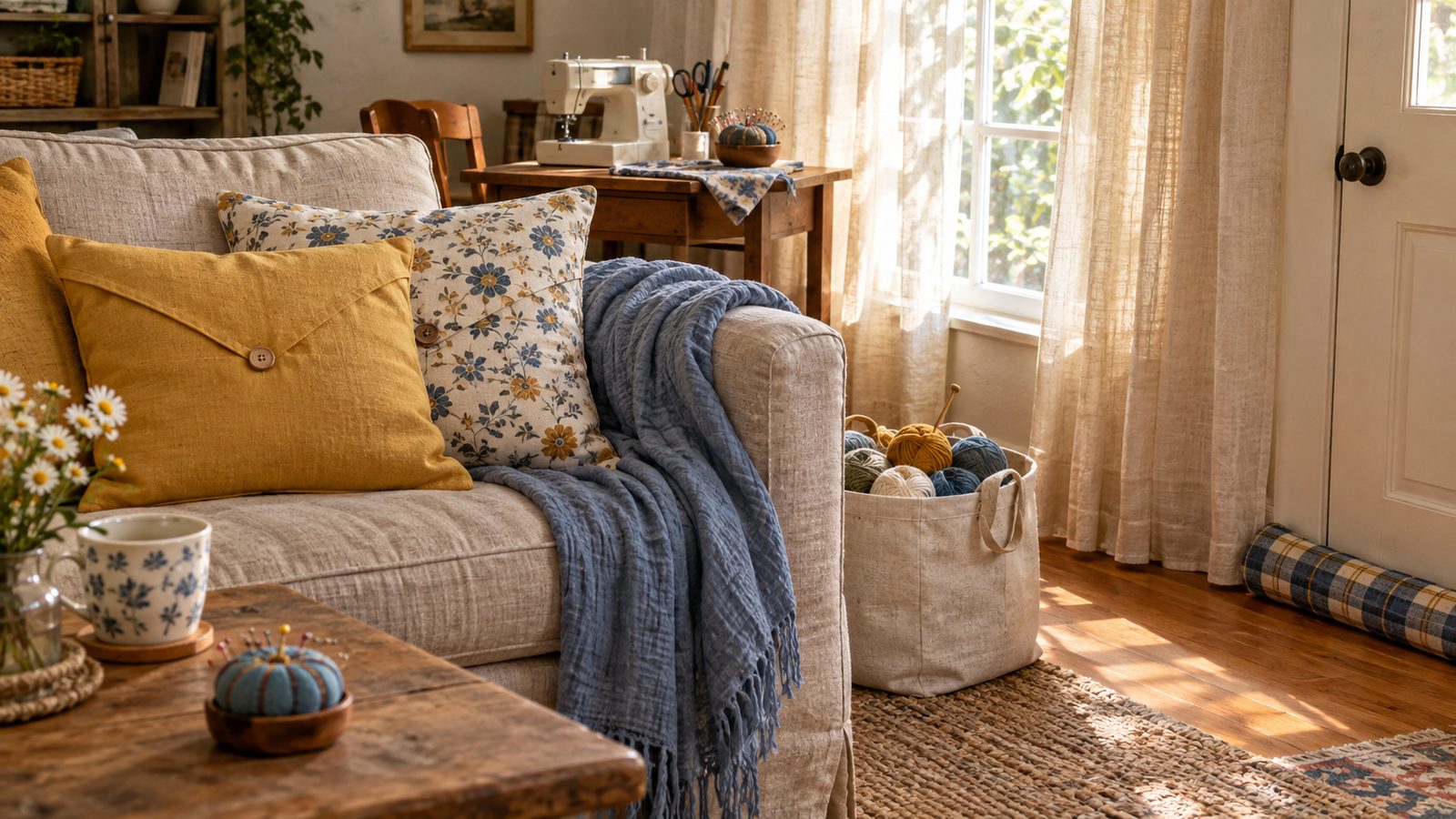
A room can feel brand new without new furniture. Swap the pillows, hang fresh curtains, put a runner on the table, and the whole space shifts, often for the price of a couple of yards of fabric.
Every project below is built from rectangles and straight seams, so a confident beginner can finish most of them in an afternoon. You’ll find rough fabric amounts and costs for each one, plus the one trick that makes it look store-bought.
New to the machine? Skim the beginner’s sewing guide first, then pick a project and start cutting.
1. Envelope Pillow Covers
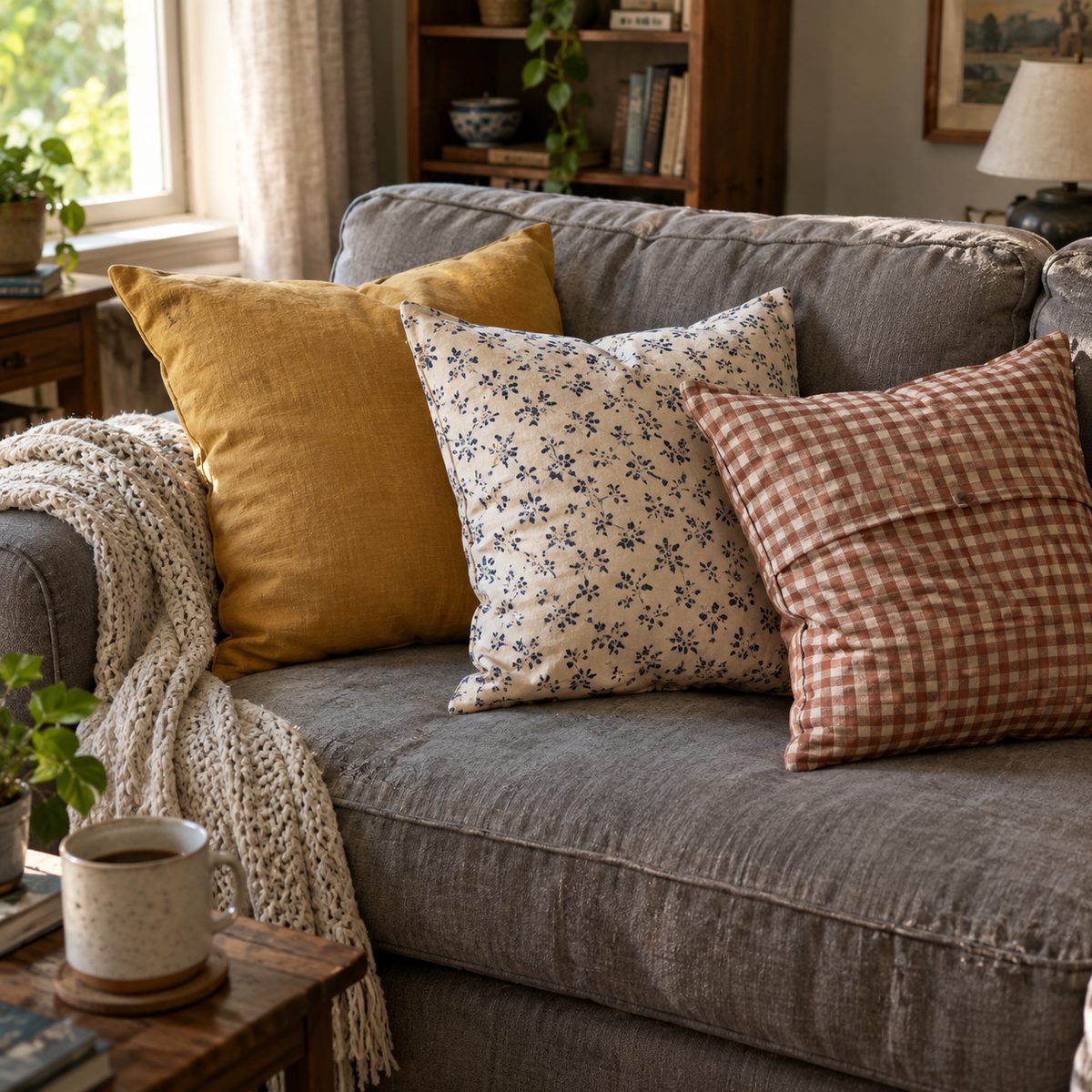
If you only sew one thing for your home, make it this. An envelope cover has no zipper and no buttons, just two overlapping back panels, so it takes about 30 minutes and swaps out seasonally.
For an 18-inch insert, cut one front at 19 x 19 inches and two backs at 19 x 13 inches. A single cover needs roughly 5/8 yard of 54-inch home decor fabric, about $6 to $12.
- Double-fold one long edge of each back piece and topstitch.
- Lay the front right side up, then both backs right side down, hemmed edges overlapping in the middle.
- Sew all four sides with a 1/2-inch seam, clip the corners, and turn.
Cutting the front the same size as the insert (instead of an inch bigger) gives you a plump, full pillow rather than a saggy one.
2. Café Curtains
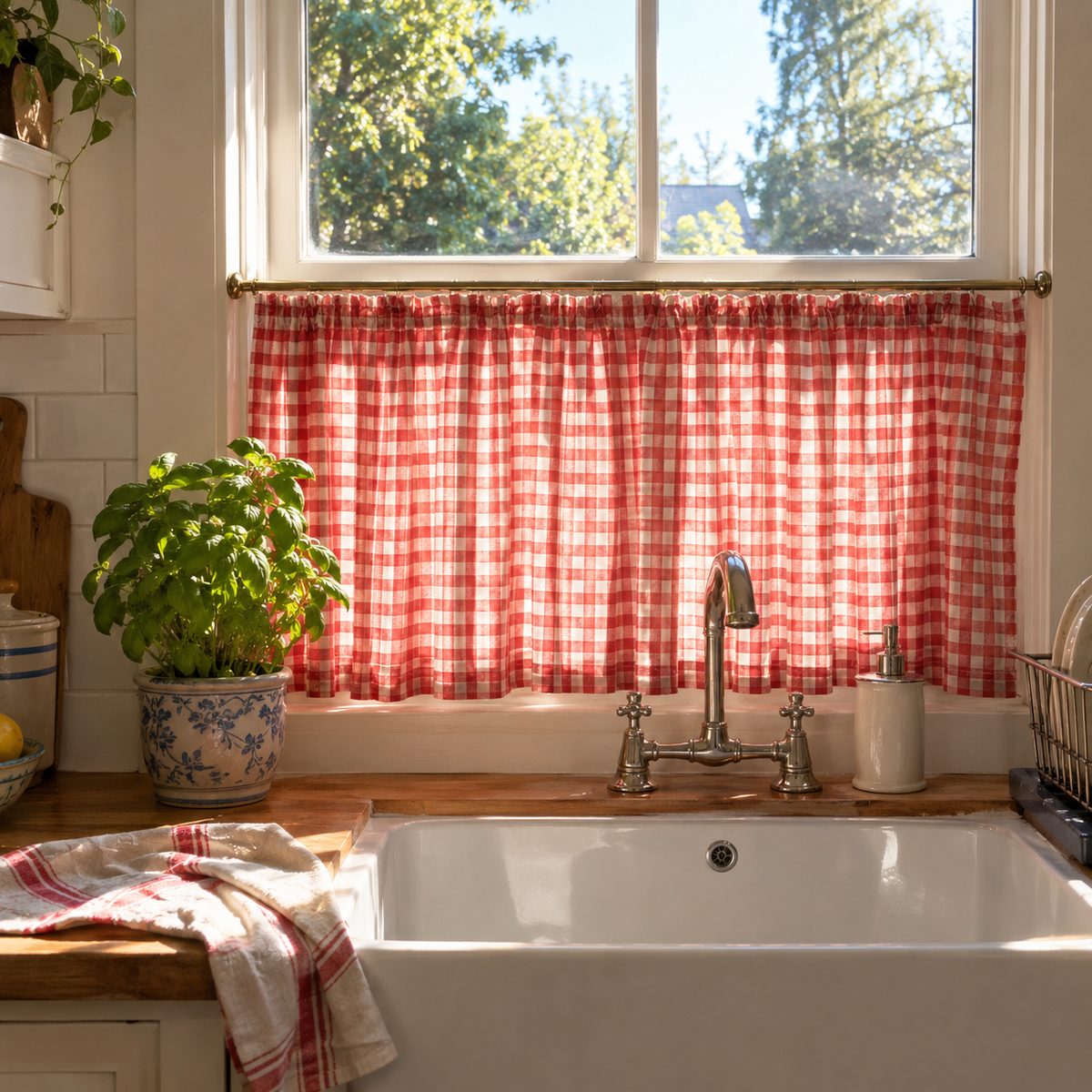
Café curtains cover just the lower half of a window, which gives you privacy at a kitchen sink or bathroom while still letting light pour in over the top. They’re one of the fastest ways to add charm to a plain window.
Measure the window width and multiply by 1.5 to 2 for fullness. For height, measure from a tension rod set at mid-window down to the sill, then add 4 inches for the rod pocket and 4 inches for the hem. A standard 36-inch window usually needs 1 to 1.5 yards of lightweight cotton or linen, around $10 to $20.
Hem the sides with a 1/2-inch double fold, sew a 2-inch double hem at the bottom, and fold the top down 2 inches twice for a rod pocket. Slide it onto a tension rod and you’re done. Gingham, ticking stripe, and eyelet cotton all look lovely here.
3. Simple Rod-Pocket Curtain Panels
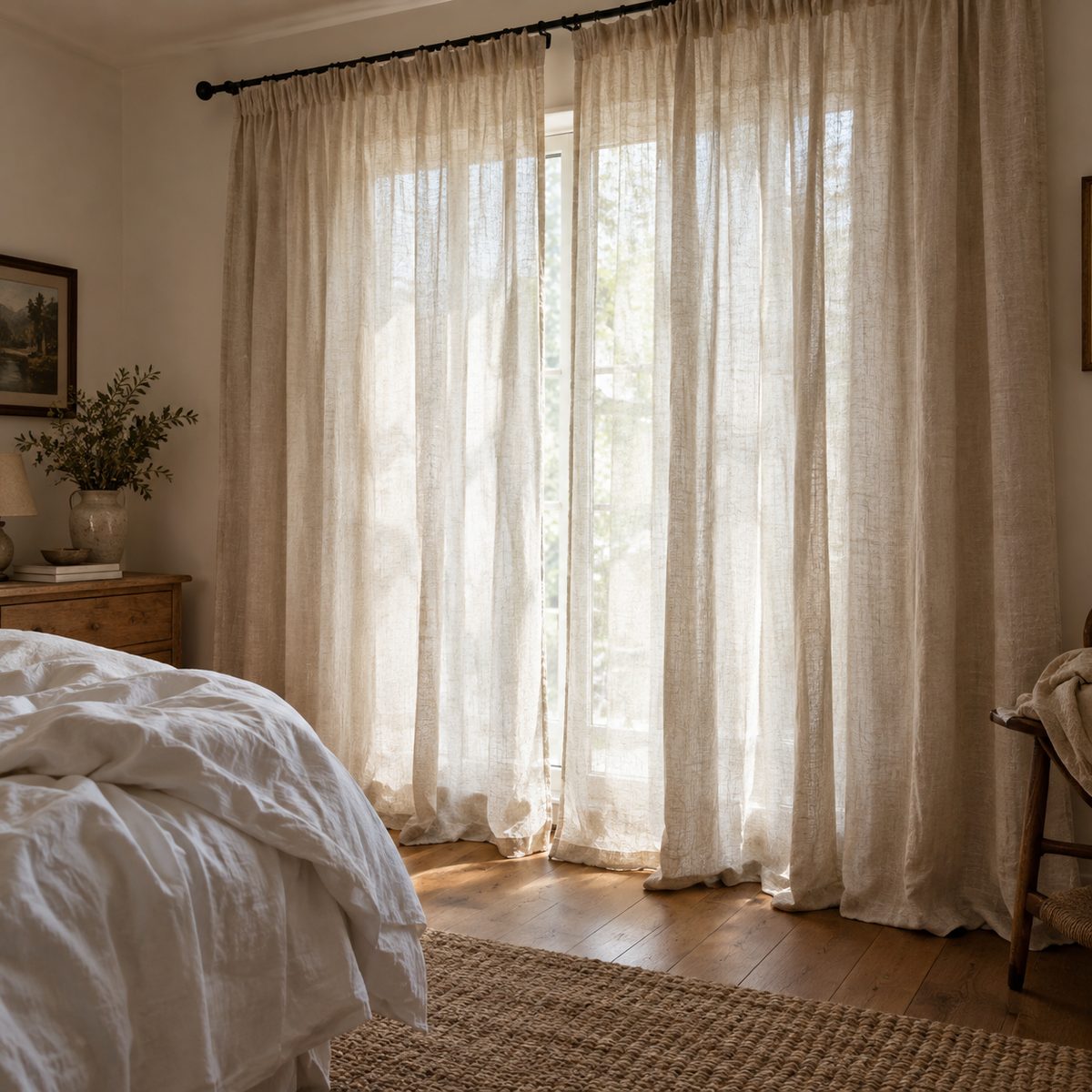
Full-length curtains are pricey in stores, especially in real linen. Sewing your own lets you pick the exact length and fabric, and the construction is nothing more than long, straight hems.
Each panel is one fabric width (about 54 inches) by your finished length plus 12 inches. For a 96-inch panel, that’s roughly 3 yards per panel, so a pair runs 6 yards. Budget linen-look cotton at $6 to $9 a yard keeps a pair under $60.
- Press and sew 1-inch double side hems.
- Sew a 4-inch double hem at the bottom for weight.
- Fold the top 3 inches twice and stitch close to the fold for the rod pocket.
Pre-wash the fabric before cutting, because curtains shrink in length first. The guide on washing fabric before sewing covers how to do it. Hang panels so they just kiss the floor for a finished look.
4. Reversible Table Runner
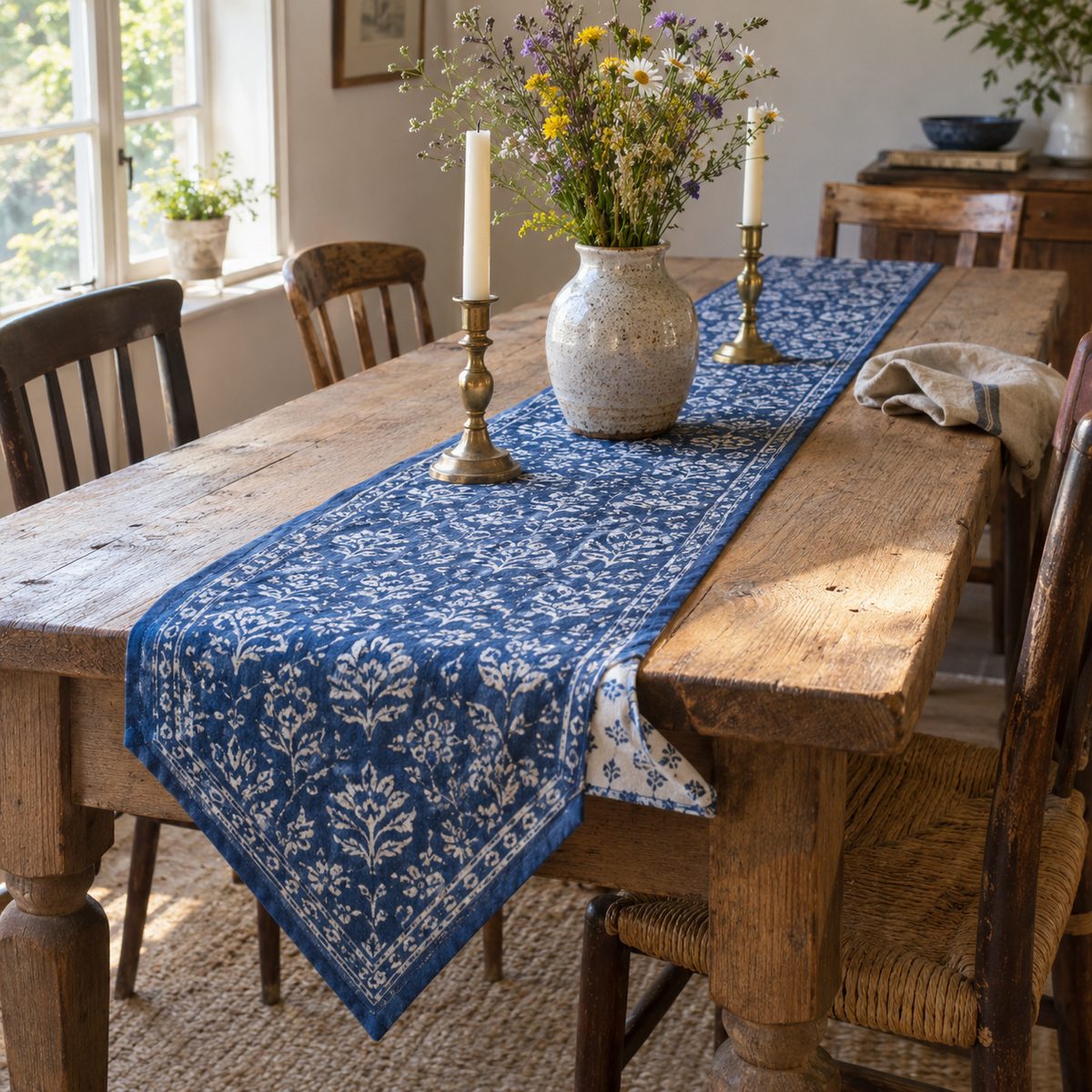
A table runner dresses up a dining table in seconds and is easy to change with the seasons. Make it reversible and you get two looks for one project.
For a 6-foot table, cut two pieces at 14 x 90 inches (about 1/2 yard each if you cut lengthwise from 54-inch fabric, though piecing two shorter lengths works fine). Expect to spend $8 to $15.
Place the pieces right sides together and sew around all edges with a 1/2-inch seam, leaving a 5-inch gap on one long side. Clip the corners, turn right side out, press hard, and topstitch 1/4 inch from the edge to close the gap and keep everything flat.
For pointed ends, fold each short end in half lengthwise and cut from the center point to about 7 inches up each side before sewing. A layer of lightweight fusible fleece inside gives the runner more body so it drapes cleanly over the table edge.
5. Fabric Storage Baskets
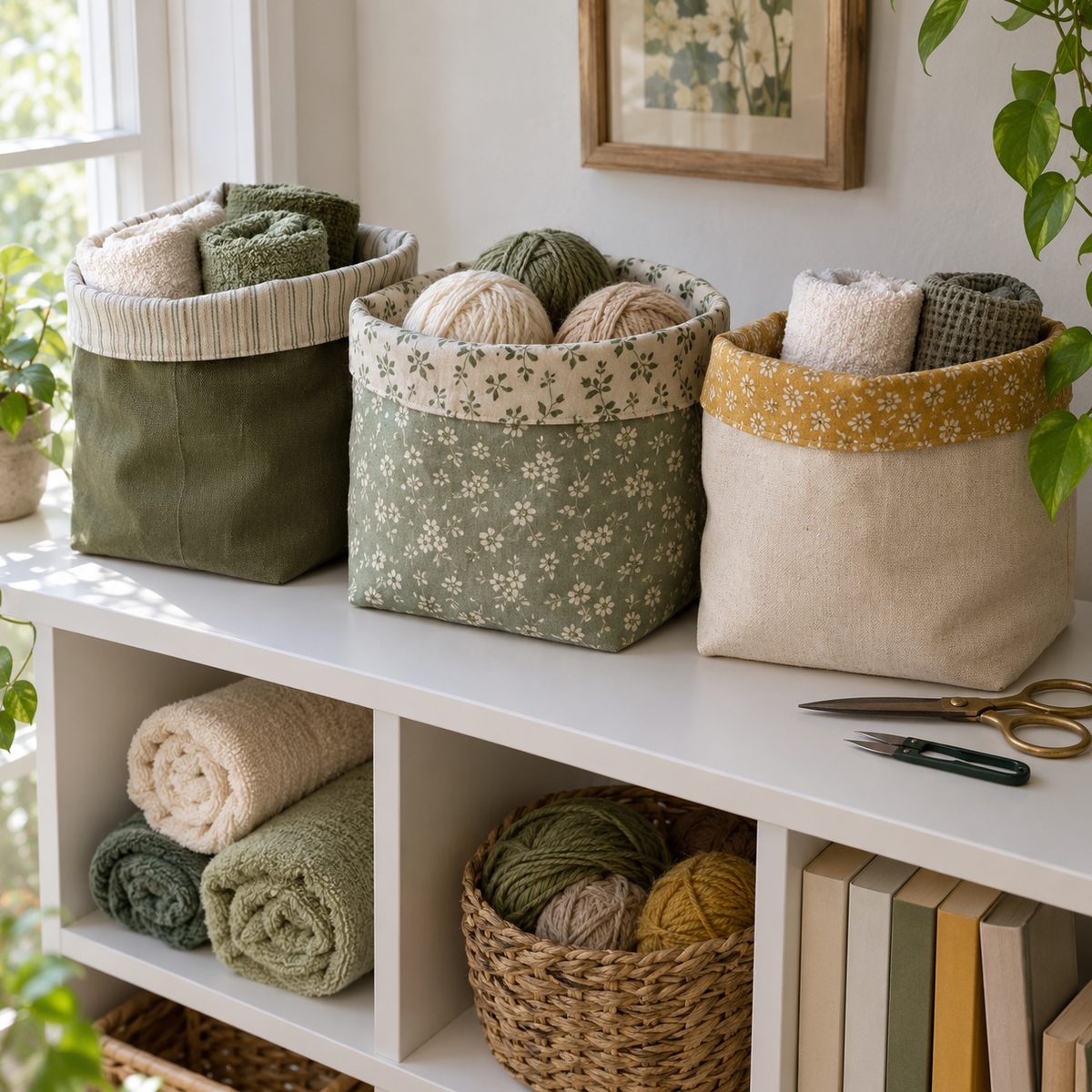
Soft fabric baskets corral remote controls, yarn, toys, and bathroom supplies, and they look far nicer than plastic bins. They also make great gifts.
For a basket about 8 inches square, cut two outer and two lining pieces at 13 x 15 inches, plus matching pieces of fusible fleece or heavyweight interfacing. Half a yard each of outer fabric and lining is plenty, around $10 to $15 total. Canvas, duck cloth, and quilting cotton all work.
- Fuse the stabilizer to the outer pieces.
- Sew sides and bottom, then box the corners by cutting out 2.5-inch squares.
- Repeat for the lining, nest it inside, and sew around the top.
The stabilizer is what makes the basket stand up on its own, so don’t skip it. Fold the top down 2 inches to show off the lining and add a sewn loop handle on each side if you like.
6. Mitered-Corner Cloth Napkins
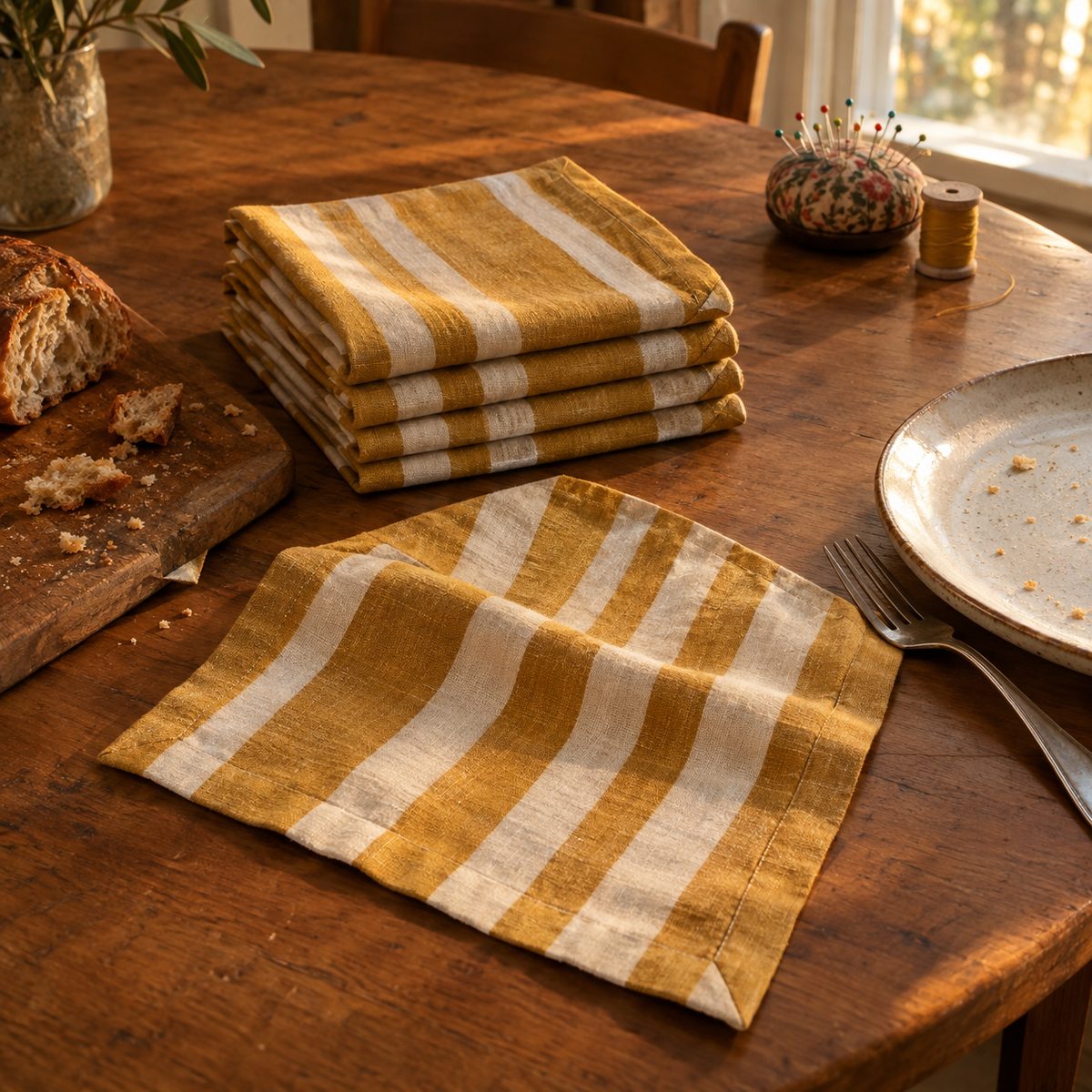
Cloth napkins cut down on paper waste and instantly make an everyday dinner feel special. A set of four is a perfect first home project because it’s all about pressing and hemming.
Cut 20-inch squares for dinner napkins. One yard of 44-inch cotton or linen yields four, so a set costs about $8 to $14.
Press a 1/2-inch fold on all four sides, then another 1/2-inch fold. Open the corners, fold each corner diagonally so the pressing lines match up, trim the tip, and refold. That’s a mitered corner, and it keeps the corners flat instead of bulky. Topstitch close to the inner fold all the way around.
Linen softens beautifully with every wash, and it hides wrinkles better than you’d think. Choose washable fabrics only, and use a size 80/12 needle for crisp stitching on cotton.
7. Quilted Placemats
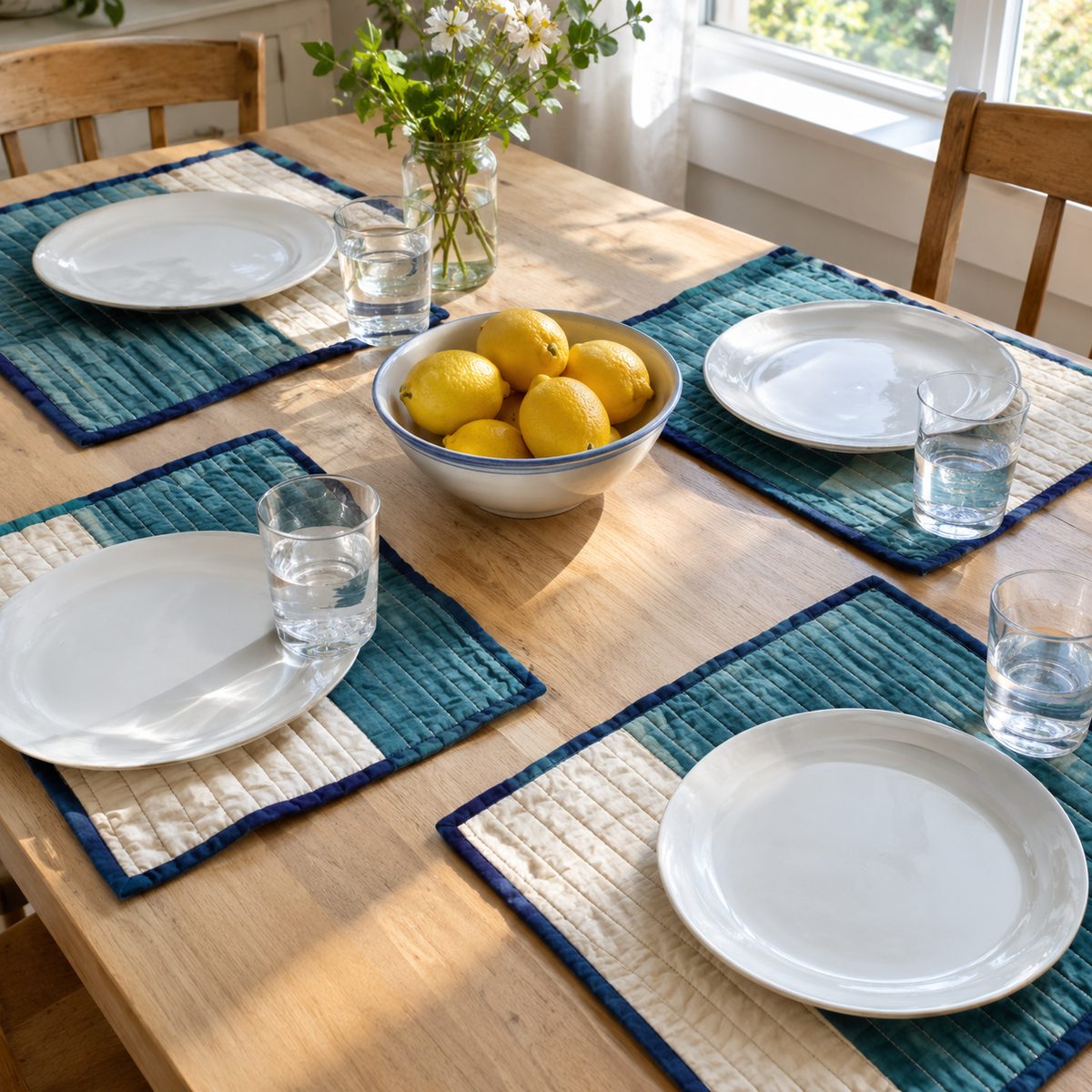
Placemats protect your table and tie a whole dining room color scheme together. Adding a thin layer of batting and some straight-line quilting makes them feel substantial and sturdy through many washes.
Cut a front, a back, and a piece of low-loft cotton batting, each at 13 x 19 inches. A set of four needs about 1 yard of fabric plus a crib-size batting pack, roughly $15 to $25.
- Layer back (right side down), batting, then front (right side up).
- Quilt straight lines 1 inch apart using a walking foot.
- Trim square and bind the edges with 2.5-inch binding strips.
If you’d rather skip binding, sew front and back right sides together on top of the batting, leave a gap, turn, and topstitch. Either way, they wash and dry well if you pre-wash the cotton first.
8. Door Draft Stopper
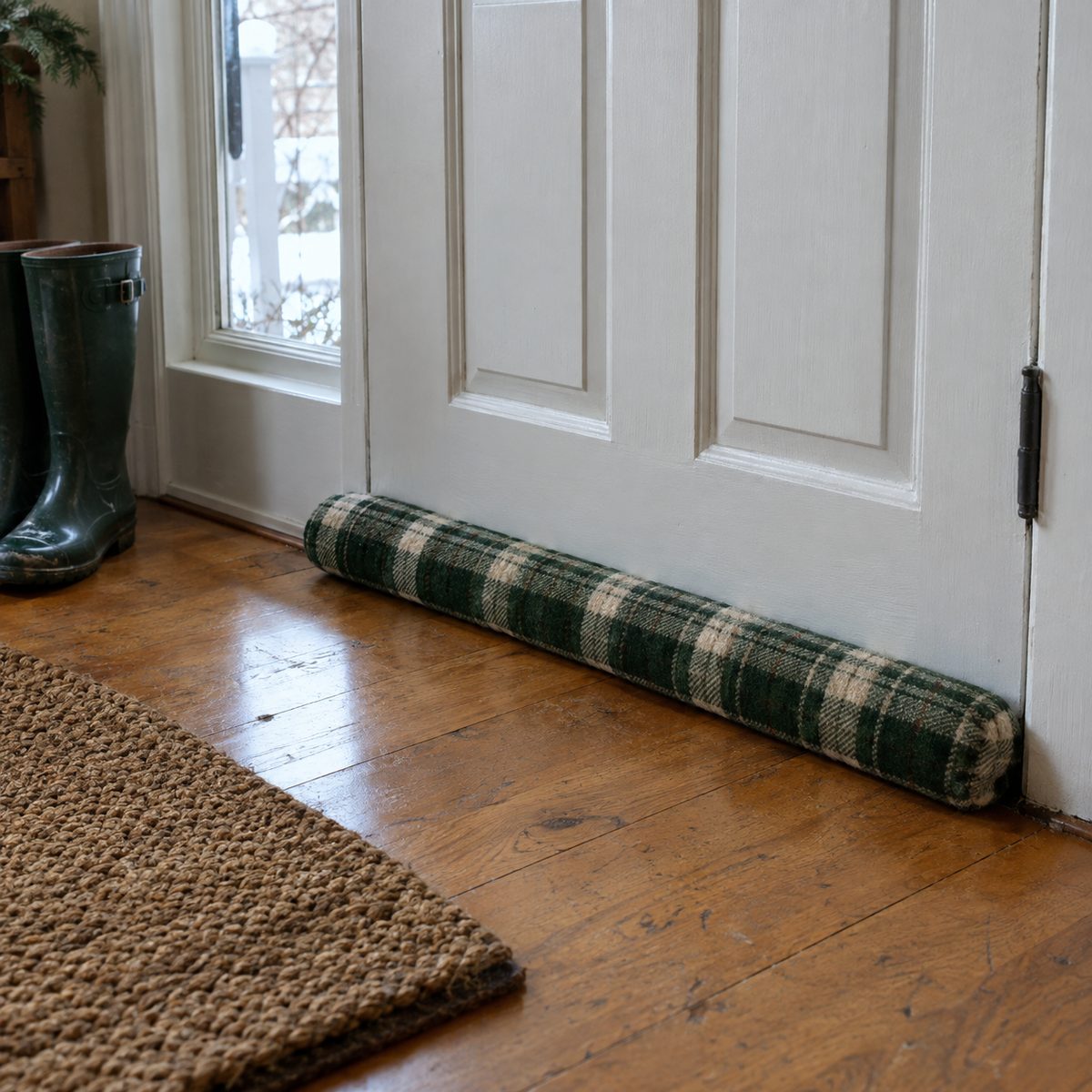
A draft stopper keeps cold air from sneaking under a door, which can make a noticeable difference in a drafty room. It’s practical, cheap, and can be surprisingly cute.
Measure your door width (usually 32 or 36 inches). Cut a fabric tube 7 inches wide by the door width plus 1 inch. A fat quarter won’t reach, but 1/4 yard of 44-inch fabric works for most doors, under $5.
Fold the strip in half lengthwise, right sides together, and sew the long side and one end with a 1/2-inch seam. Turn right side out. Fill with dry rice, split peas, or play sand in a zip bag for weight, topped with polyester fiberfill for loft. Fold the open end in and hand stitch it closed.
For a washable version, make an inner tube of muslin to hold the filling and slip a zippered or envelope-style outer cover over it.
9. Gathered Lampshade Cover
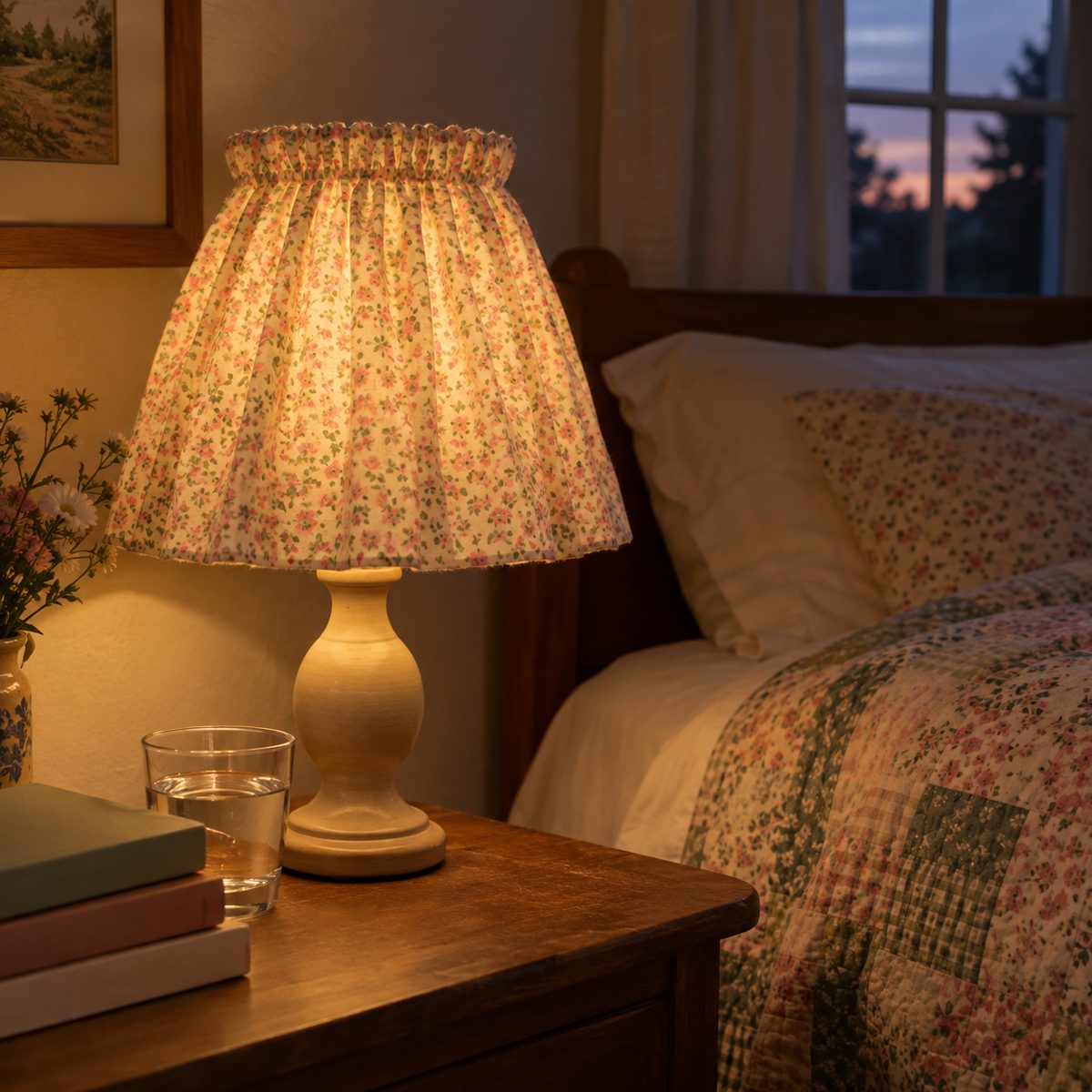
A tired lampshade can get a whole new personality with a simple gathered fabric cover. No need to buy a new lamp, and you can slip it off to wash or change it later.
Measure the bottom circumference of the shade and multiply by 1.5. Measure the height and add 3 inches. For a typical table lamp that’s about 1/2 yard of lightweight cotton or voile, around $5 to $8.
- Sew the short ends together to form a tube.
- Hem the bottom with a narrow 1/4-inch double fold.
- Fold the top down 1 inch to make a casing and thread in elastic or a drawstring.
Pull the top snug around the shade’s upper edge and adjust the gathers evenly. Use light-colored fabric so the lamp still glows, and keep fabric well clear of the bulb by using an LED bulb and a shade at least as tall as the original.
10. Headboard Slipcover
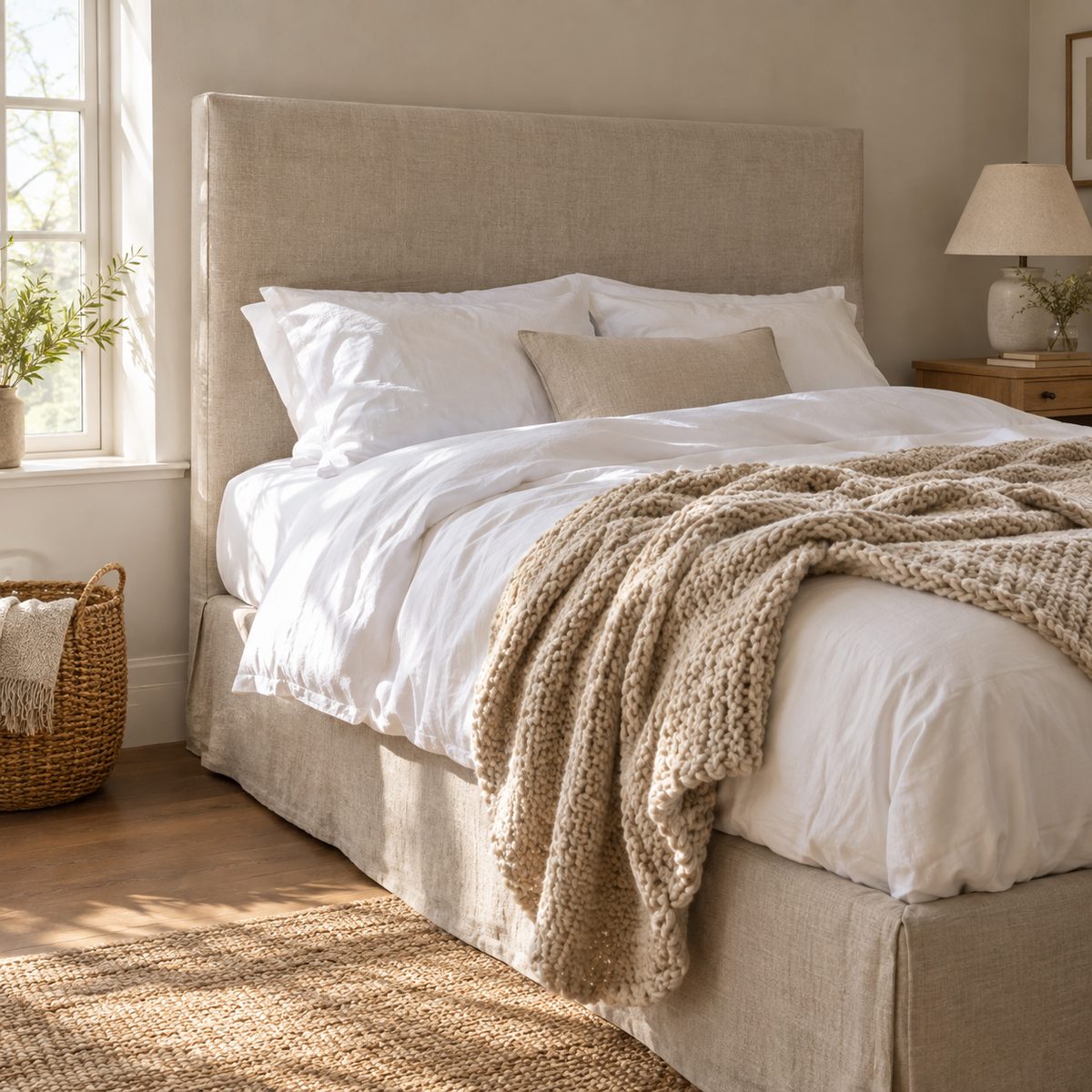
A headboard slipcover hides a dated wood or scratched upholstered headboard and softens the whole bedroom. It’s a larger project, but it’s really just a big pillowcase with boxed sides.
Measure the headboard width, height above the mattress, and depth. Cut a front and back at width plus 1 inch by height plus 1 inch, and a side strip at depth plus 1 inch wide, long enough to run up one side, across the top, and down the other. A queen headboard usually takes 3 to 4 yards of medium-weight linen or cotton canvas, about $30 to $50.
Sew the side strip to the front, then to the back, pivoting at the corners. Hem the bottom edge with a 1-inch double fold. Slide it over the headboard like a sweater.
Before sewing the final seams, baste it together and test the fit, since a snug slipcover looks tailored while a loose one looks sloppy.
11. Tie-On Chair Cushion Covers
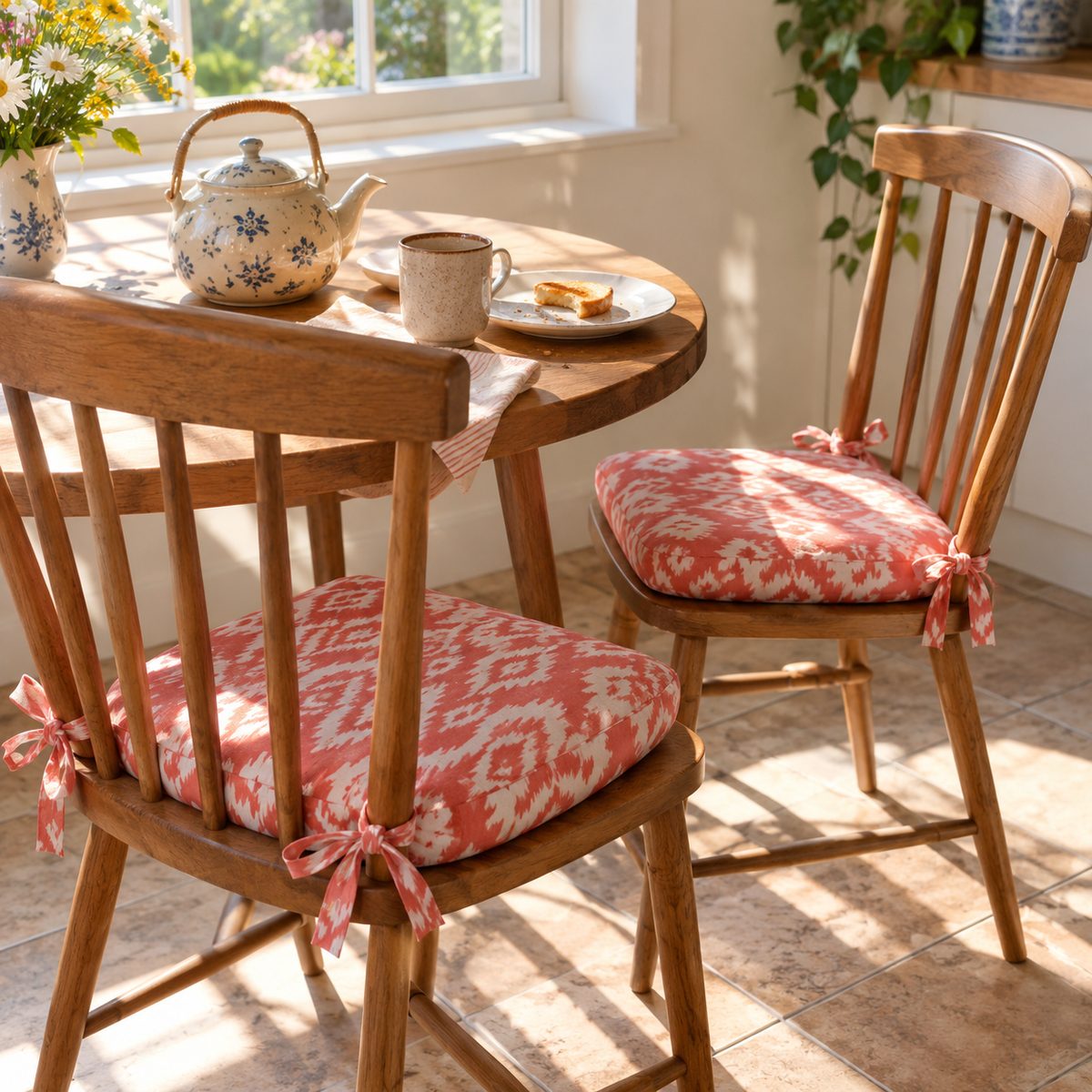
Hard wooden dining or kitchen chairs get far more comfortable and more colorful with tie-on cushions. Covering existing foam pads is the cheapest route, and custom covers can match any room.
Trace the chair seat on paper, add 1/2 inch all around, and cut a top and bottom from each pattern. Cut four ties at 2 x 16 inches. Two chairs usually need 1 yard of outdoor fabric, canvas, or heavy cotton, around $10 to $18 plus foam.
- Fold, stitch, and turn the ties, then pin them at the back corners.
- Sew top and bottom right sides together, leaving the back edge open.
- Turn, insert 1- or 2-inch foam, and hand stitch or zip closed.
Rounding the front corners slightly on your pattern gives a neater fit on most chair seats.
12. Double Gauze Throw Blanket
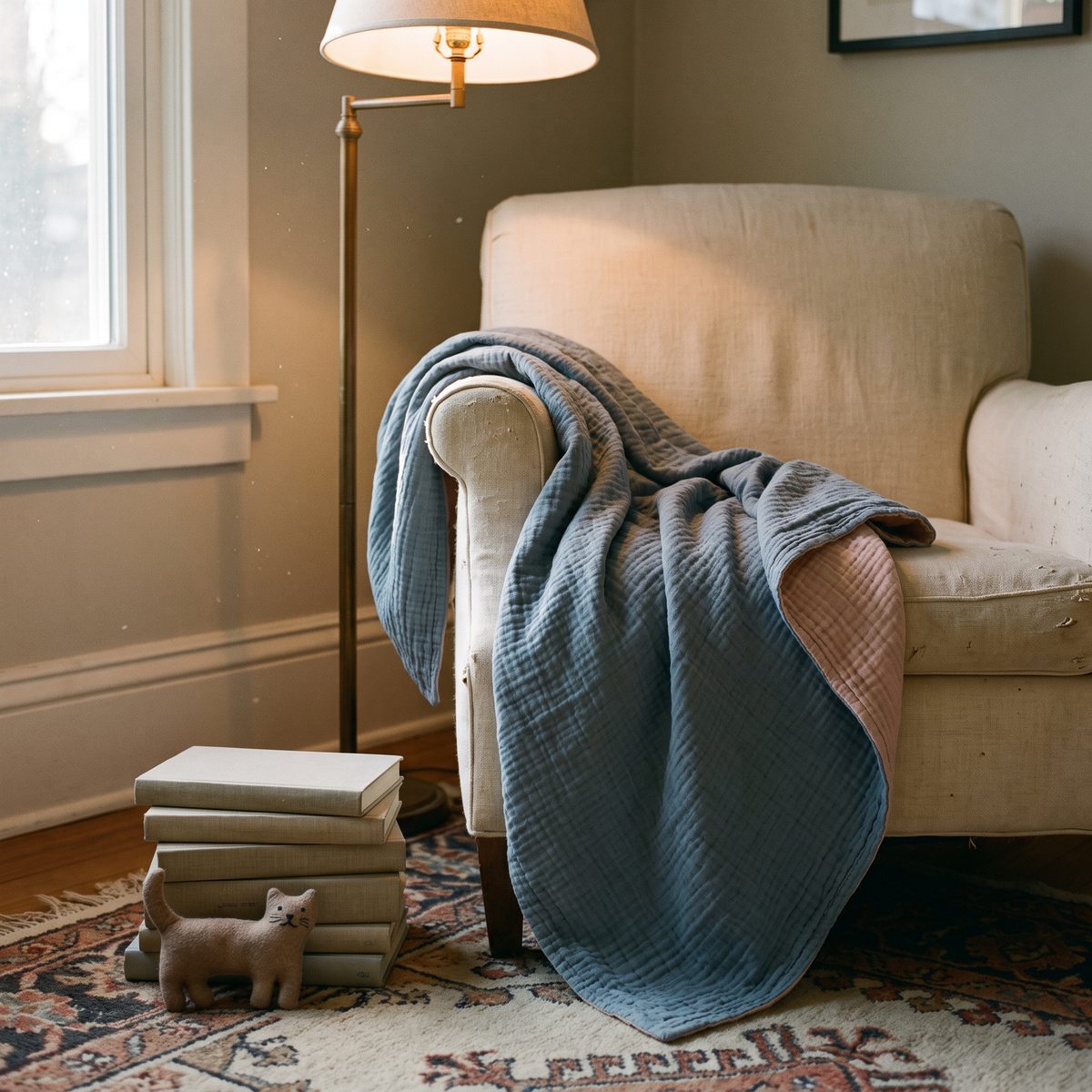
A soft throw draped over a sofa or at the foot of a bed adds instant coziness and a pop of color. Double gauze is my go-to for throws because it’s light, breathable, and gets softer each wash.
Buy 2 yards each of two coordinating double gauze prints (about 50 x 70 inches finished). Expect $35 to $55, still less than many store-bought linen throws.
Pre-wash both pieces, since double gauze shrinks and crinkles. Lay them right sides together, sew around with a 1/2-inch seam leaving a 10-inch gap, clip corners, and turn. Press, then topstitch 1/2 inch from the edge.
To keep the layers from shifting, stitch a few straight lines across the width every 12 to 15 inches, or add a handful of hand-tied knots with embroidery floss. Use a slightly longer stitch length (3.0 mm) so the soft gauze doesn’t pucker.
13. Linen Tea Towels
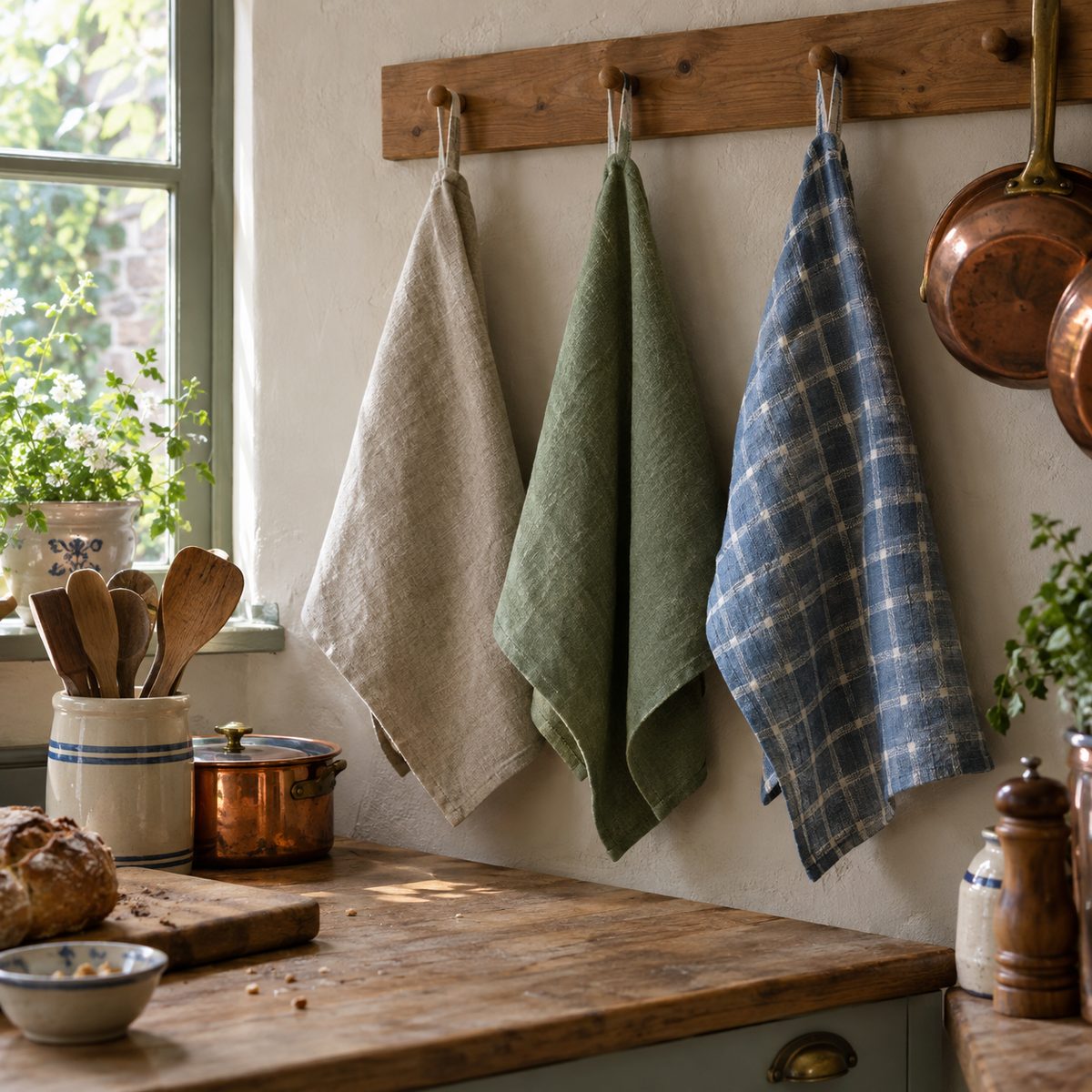
Tea towels are small, fast, and genuinely useful, and a fresh set hanging on the oven handle perks up a kitchen immediately. They’re also a great way to use up leftover linen.
Cut rectangles at 20 x 30 inches. One yard of 54-inch linen or cotton-linen blend makes about three, costing $10 to $20 per set.
Press a 1/2-inch double fold on all four edges and topstitch. Add a hanging loop by folding a 2 x 6-inch strip into quarters lengthwise, stitching it closed, and tucking the ends into one corner before you hem.
Pure linen is the most absorbent and lint-free for drying glassware. Striped or checked linen hides stains better than solids. If you want a quick finish, a rolled hem on a serger gives a neat, narrow edge in minutes.
14. Simple Rectangle Tablecloth
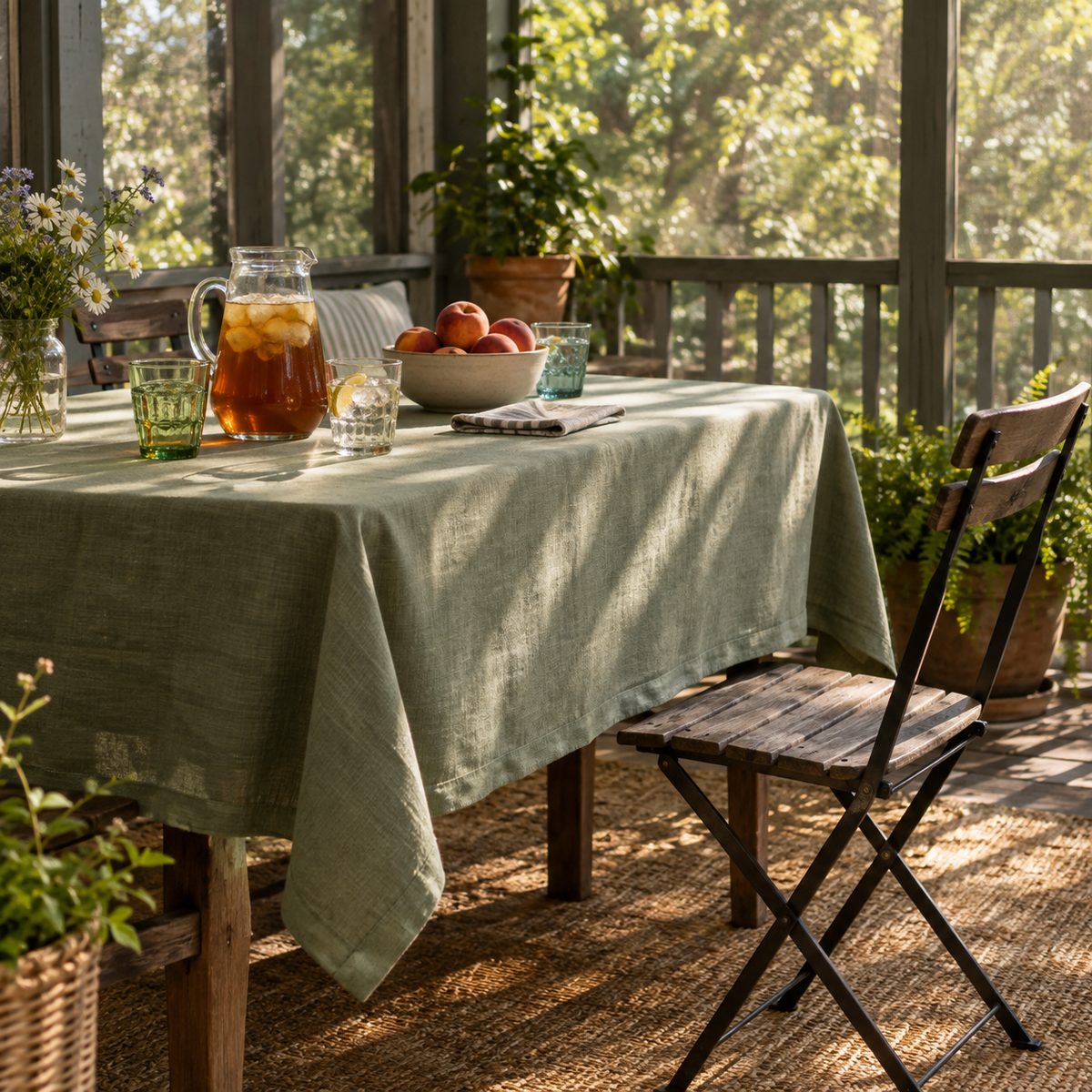
A tablecloth changes the look of a dining room more than almost anything else, and custom-sizing your own means no awkward overhang. It’s also an easy way to hide a worn tabletop.
Measure table length and width, then add 20 inches to each (10 inches of drop per side) plus 2 inches for hems. For a 60 x 36-inch table, cut 82 x 58 inches. Wide 60-inch fabric avoids seams, and you’ll need about 2.5 yards, roughly $20 to $35.
If your fabric is narrower than the table, don’t put a seam down the middle. Instead, use one full width in the center and add equal strips to both sides so the seams fall near the table edges.
Press a 1-inch double hem all around, mitering the corners like a napkin, and topstitch. Cotton sateen, linen, and outdoor fabric all wear well.
15. Hanging Wall Organizer
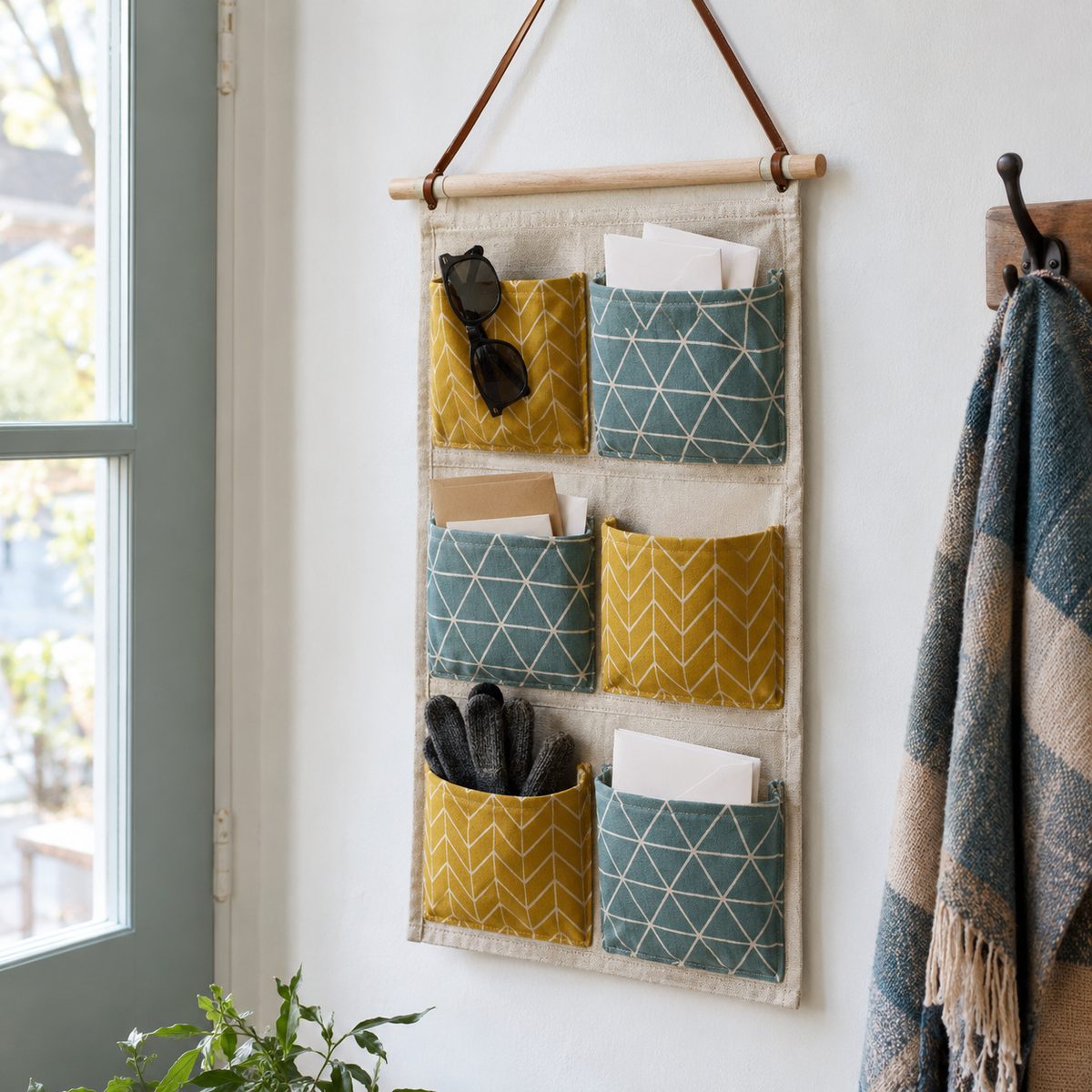
A pocketed wall organizer rescues cluttered entryways, craft corners, and kids’ rooms. Hang it on a door or a wooden dowel and it holds mail, sunglasses, chargers, or art supplies.
Cut a backing panel at 18 x 30 inches from canvas or duck cloth, plus a matching lining. Cut pocket strips at 18 x 12 inches, doubled over for a clean top edge. About 1.25 yards of canvas and a fat quarter or two for pockets costs $15 to $25.
- Fuse medium-weight interfacing to the backing so it doesn’t sag.
- Stitch pocket strips in rows, sewing vertical lines to divide them.
- Sew backing to lining, turn, and make a casing at the top for a dowel.
Adding a small pleat at the bottom of each pocket gives space for bulkier items.
16. Floor Pouf
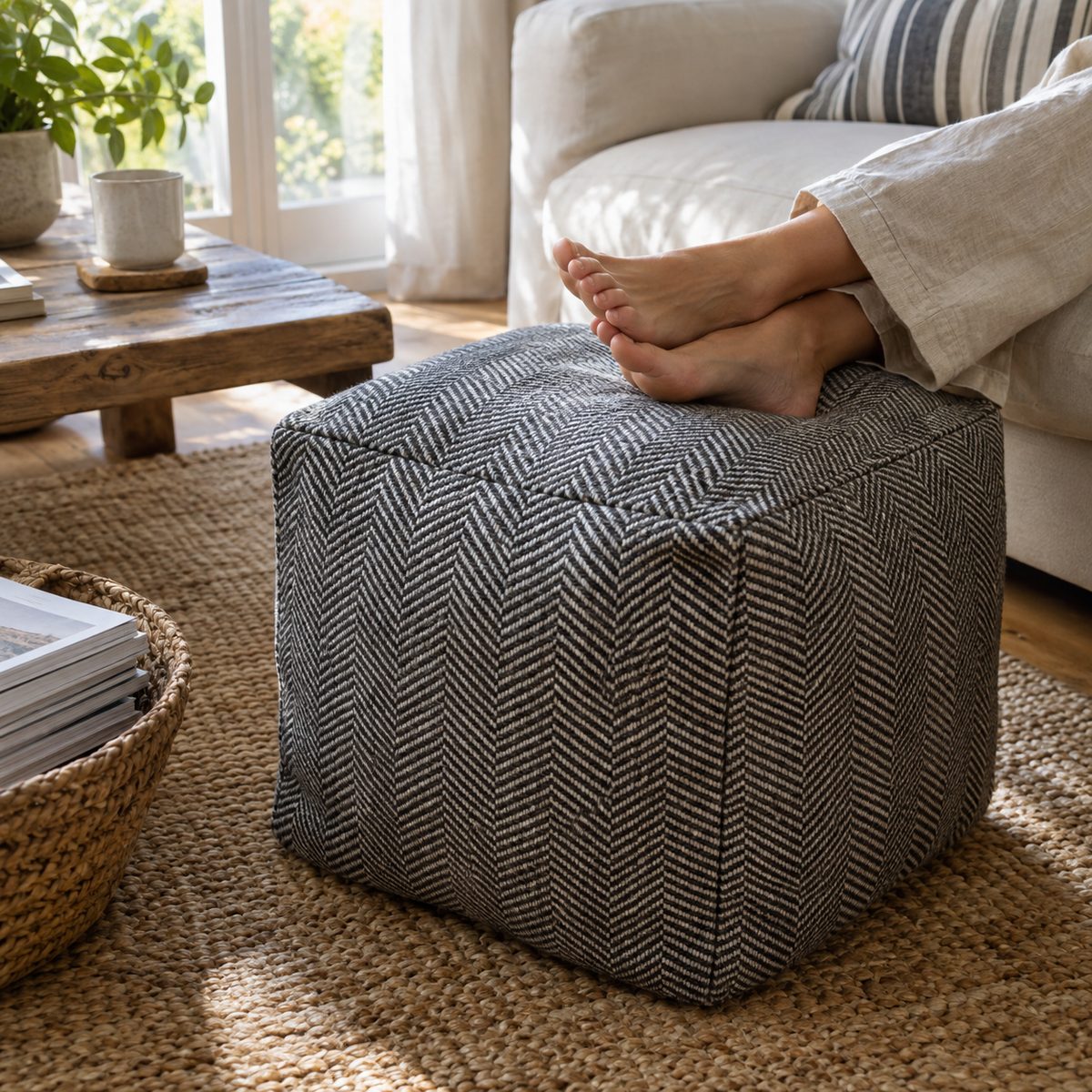
A floor pouf is extra seating, a footrest, and a side table all in one, and store-bought versions often cost $80 or more. You can sew one for a fraction of that and stuff it with fabric scraps you already have.
For an 18-inch cube, cut six 19-inch squares (a 1/2-inch seam allowance included) from upholstery fabric, canvas, or denim. That’s about 1.75 yards, $20 to $35. Put a zipper in the bottom panel so you can stuff and refill it.
Sew the four side panels into a loop, then attach the top, pivoting carefully at each corner. Attach the zippered bottom last. Turn right side out and pack it very firmly with fabric scraps, old pillows, or polyester fiberfill.
A heavy-duty needle (size 100/16) handles the thick corners, and it helps to walk the machine slowly through the layers by hand.
Pick One Room and Start There
The easiest way to get a big impact is to choose one room and sew two or three coordinating pieces for it, such as pillow covers, a runner, and napkins in the same color family. Start with a beginner-friendly project like envelope covers or tea towels, then move up to curtains and slipcovers once your seams are straight and confident. Keep a small stash of leftover home decor fabric, too, because the scraps are perfect for baskets, draft stoppers, and pouf filling later on.