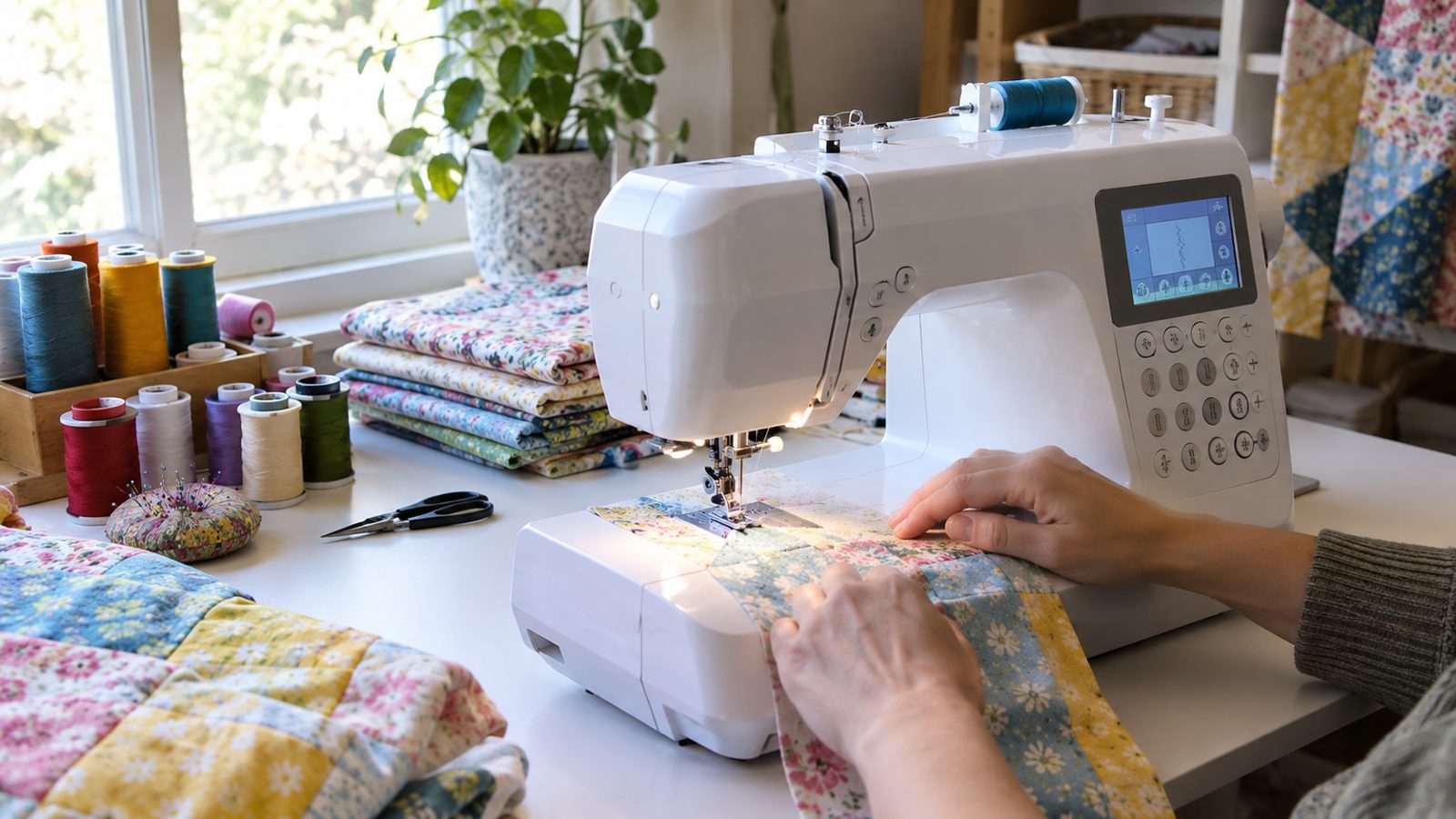
Brother is one of the most familiar names in home sewing. If you have walked into a craft store, browsed a big-box retailer, or asked a friend what machine she learned on, there is a good chance a Brother came up. The company started out repairing and selling sewing machines in Japan more than a century ago, and while it is now just as well known for printers and labelers, sewing and embroidery are still where the brand began.
What makes Brother interesting for home sewists is range. The US lineup runs from lightweight machines for first-time sewists all the way to dealer-sold flagships that combine sewing, quilting and large-format embroidery. In between you will find heavy-duty models, straight-stitch quilting machines, sergers, cover stitch machines and a deep bench of home embroidery machines.
In short, Brother suits beginners, budget-minded hobbyists and embroidery lovers especially well, and it has solid options for quilters and garment sewists who want to grow into more capable equipment.
AT A GLANCE
- Founded: 1908, in Nagoya, Japan, as the Yasui Sewing Machine Co.
- Headquarters: Nagoya, Japan (Brother Industries, Ltd.); US operations are run by Brother International Corporation in Bridgewater, New Jersey
- Parent company: Brother Industries, Ltd., a publicly traded Japanese company
- Known for: Easy-to-use computerized machines, home embroidery machines, and a very wide lineup
- Best for: Beginners, hobby sewists, crafters who want embroidery, and quilters looking for value
A short history of Brother
Brother’s story begins in 1908, when Kanekichi Yasui set up the Yasui Sewing Machine Co. in Nagoya, Japan. The early business repaired and resold sewing machines rather than building its own. His son Masayoshi Yasui took over the operation in 1923, and in 1928 Masayoshi and his brother Jitsuichi reorganized it as the Yasui Brothers’ Sewing Machine Co. That is where the “Brother” name comes from: it was chosen to reflect the siblings working together.
The company was renamed Nippon Sewing Machine Manufacturing Co. in 1934 and moved from repairs into making machines, including industrial sewing machines. In the 1950s Brother expanded overseas. Its US distributor, Brother International Corporation, was formed in that decade and remains Brother’s Americas arm today. In 1962 the parent company took the name it still uses, Brother Industries, Ltd. Brother also bought the British Jones Sewing Machine Company in 1968, giving it a foothold in the UK.
Over the following decades the brand became known for bringing electronics into home sewing. Brother describes its 1979 Computer-Sew 1000 as the first computerized home sewing machine. In 1991 it released the PC7000, its first home embroidery machine, and in 2000 the ULT2001 became Brother’s first computerized sewing and embroidery machine with a color display. Those vintage models are long discontinued, but they explain why Brother is so strongly associated with embroidery today.
Brother has grown well beyond sewing, into printers, labelers and industrial equipment, but home sewing machines are still a core product. In 2017 the company announced it had built a cumulative 60 million home sewing machines.
What Brother is known for
Approachability. Brother machines tend to be designed with newer sewists in mind. Features like automatic needle threaders, drop-in bobbins, LED-lit work areas, one-step buttonholes and clear LCD screens show up even on modest models. That makes them less intimidating than many older-style machines.
Home embroidery. Brother is one of the names people think of first for embroidery at home. The lineup includes embroidery-only machines, sewing and embroidery combos, and higher-end models with large hoops, wireless design transfer and support for Brother’s Artspira app. Licensed design collections, including Disney designs on some models, are part of the appeal.
Breadth of choice. Few brands cover as much ground. Whether you want a simple entry-level machine, a heavy-duty model with a metal frame, a straight-stitch quilting machine, a serger or a cover stitch machine, Brother has something in the current catalog.
Feel and build. Most entry-level and mid-range Brother machines are lightweight; Brother lists the XM2701, for example, at about 12.6 pounds. That keeps them easy to carry to a class, but they feel lighter and less planted than older all-metal machines. The heavy-duty line and the higher-end quilting and flagship models are built more substantially.
Two ways to buy. Many Brother machines are sold through mass retailers and directly from Brother, while top-tier models such as the Aveneer and Essence series are aimed at authorized dealers, who can offer classes, setup help and local service.
Brother’s current sewing machine lineup
Here is how the current US lineup breaks down, based on the categories Brother lists on its own site. Model numbers change often, so treat the examples as a starting point rather than a complete list.
Basic and entry-level sewing machines
These are the simplest Brother machines: easy stitch selection, a modest number of built-in stitches and very little to go wrong. They suit beginners, kids learning to sew, and anyone who mostly hems, mends and makes simple projects. The XM2701, which Brother lists as a sewing and quilting machine with 27 built-in stitches, a one-step buttonhole and an automatic needle threader, is a long-running example.
Computerized sewing machines
Brother’s computerized machines add push-button stitch selection, an LCD screen, more decorative and utility stitches, multiple buttonhole styles and speed control. They are a good fit for confident beginners and hobby sewists who make garments, home décor and small quilts. The CS7205 is a current example, with 205 built-in stitches, a backlit LCD and a wide table for larger projects. If you are just starting out, our guide to the best sewing machines for beginners goes deeper on this category.
Heavy-duty sewing machines
Brother’s “Strong and Tough” heavy-duty models are built for denim, canvas and outdoor fabrics. They have a metal frame, come with heavy-duty needles and have a sturdier feel than the standard lightweight machines. The ST531HD, which Brother says can handle up to six layers of denim, is one current model. Keep in mind that “heavy duty” in a home machine means tougher everyday sewing, not industrial capability.
Quilting machines
Quilters have several options. Many computerized Brother machines come with wide tables and quilting feet, and there are dedicated series such as Pacesetter and Quilt Club. For serious piecing and free-motion work, the PQ1600S is a high-speed, straight-stitch-only machine with a large workspace and a push-button thread cutter. Straight-stitch machines give up decorative stitches in exchange for precision, a trade many quilters are happy to make. See our roundup of the best sewing machines for quilting for more comparisons.
Embroidery and sewing/embroidery combos
This is Brother’s deepest category. Embroidery-only machines such as the PE545 use a 4″ x 4″ embroidery area and are a popular way to start monogramming and appliqué. Combination machines like the SE2000 sew and embroider, with a 5″ x 7″ embroidery area, a color touchscreen and wireless design transfer. Brother also sells the Skitch PP1, a compact embroidery-only machine for quick personalization projects. Our guide to the best embroidery machines can help you compare hoop sizes and features.
High-end and flagship machines
At the top of the range, Brother’s dealer-focused machines combine sewing, quilting and large-format embroidery. The Aveneer EV1 is currently the flagship, with an 11 5/8″ x 18 1/4″ embroidery area (Brother’s largest), a 10.1″ touchscreen, on-fabric projection and wireless connectivity. The Essence series, including the VE2300 and VM5200, also sits in the upper tier. These machines are a serious investment and are best bought from a dealer who will teach you how to use them.
Sergers and cover stitch machines
For finishing seams and sewing knits, Brother sells a full range of sergers and cover stitch machines. The 1034D is a well-known 3/4-thread serger with differential feed and color-coded threading. There are also air-threading sergers and dedicated cover stitch machines such as the CV3440 for professional-looking hems on knits. If you are weighing one up, our serger reviews are a good next stop.
Things to know before you buy
Brother’s biggest strength, its approachable entry-level machines, also comes with trade-offs. The lighter models are easy to carry, but they can bounce or walk on the table at top speed and may struggle with very thick seams. They are made for regular home sewing, not daily heavy production. If you sew thick materials often, look at the heavy-duty line or a straight-stitch machine rather than pushing a basic model past its comfort zone.
The sheer size of the catalog can be confusing. Brother offers many closely related models, some sold only through specific retailers, with small differences in stitch count, accessories or included tables. It is worth comparing spec sheets carefully so you do not pay for a number that does not matter to you. A higher stitch count is not the same thing as a better machine.
Where you buy also matters. A machine from a mass retailer is convenient, but you generally get less hands-on help than you would from a dealer, and the most advanced Brother machines are aimed at dealers anyway. For expensive embroidery combos, local classes and service support can be worth as much as the feature list.
Finally, warranty coverage differs by model, so check the terms on Brother’s product page or with your seller before you commit.
Which Brother machine is right for you?
- Complete beginners: A simple model like the XM2701 keeps things easy while you learn the basics.
- Growing hobby sewists: A computerized machine with a wide table, such as the CS7205, gives you more stitches and room to grow.
- Denim, canvas and home décor: Look at the Strong and Tough heavy-duty models.
- Quilters: A wide-table computerized machine is fine for occasional quilts; dedicated quilters should consider a straight-stitch machine like the PQ1600S.
- Embroidery fans: Start with a 4″ x 4″ machine for monograms and small designs, or step up to a 5″ x 7″ combo if you want to sew and embroider on one machine.
- Garment sewists working with knits: Add a serger, and later a cover stitch machine, alongside your regular machine.
Frequently asked questions
Are Brother sewing machines good for beginners?
Yes. Beginners are one of the groups Brother serves best. Many entry-level models include automatic needle threaders, drop-in bobbins, one-step buttonholes and clear stitch selection, which remove a lot of early frustration.
Where are Brother sewing machines made?
Brother is a Japanese company headquartered in Nagoya, but its home sewing machines are built at production bases outside Japan. In 2017 Brother said those bases were in Taiwan, China and Vietnam. The country of manufacture for a specific model is usually shown on the machine or its box.
Who owns Brother?
Brother sewing machines are made by Brother Industries, Ltd., a publicly traded company based in Nagoya, Japan. In the US, the brand is handled by its subsidiary, Brother International Corporation, based in Bridgewater, New Jersey.
Does Brother make embroidery machines as well as sewing machines?
Yes. Embroidery is one of Brother’s specialties, with embroidery-only machines, sewing and embroidery combos, and high-end models with very large embroidery areas.
Brother has spent more than a century in sewing, and today it offers one of the widest home lineups you can find. If you want an easy first machine, an affordable way into embroidery or a capable quilting setup, it deserves a spot on your shortlist. Match the machine to how often and how heavily you sew, and check the current lineup on Brother’s official website before you buy.