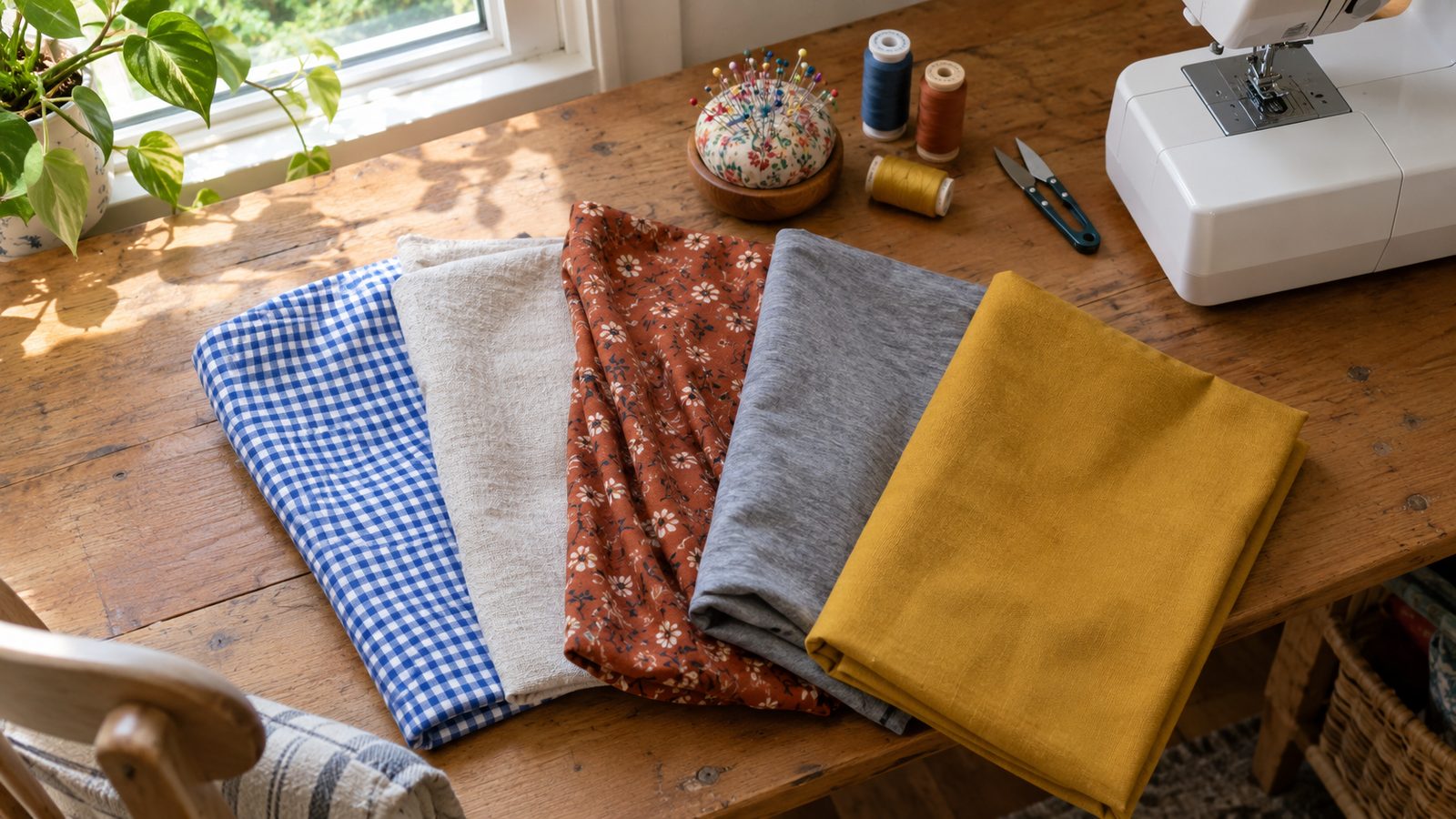
Choosing fabric gets much easier once you stop asking “what’s pretty?” first and start asking “what does this project need to do?” A tote bag has to hold its shape, a summer dress has to breathe and move, and pajama pants have to survive dozens of trips through the washer.
The short answer: match the fabric’s drape, stretch, weight and care needs to the project, then pick the color and print you love within that group. Below is how to judge each of those qualities, read the label on the bolt, and pair fabrics with the projects most beginners start with.
Quick answer
- Beginners do best with stable, medium-weight woven cotton: it doesn’t slip, stretch or fray much.
- Check the pattern envelope’s suggested fabrics first; they tell you the drape and stretch the design expects.
- Read the bolt end for fiber content, width and care before you buy.
- Save slippery, stretchy and very sheer fabrics for your third or fourth project.
Start with what the project needs
Every project asks four questions of its fabric, and answering them before you shop narrows a whole store down to a couple of aisles.
Drape is how the fabric hangs and falls. Hold a length of it up from one corner or gather it loosely in your hand. A fabric with soft drape, like rayon challis, pools and swings; a crisp fabric, like quilting cotton, stands away from the body and holds folds. Flowy skirts, wide-leg pants and blouses with gathers want drape. Structured shapes such as a boxy jacket or an A-line skirt that flares on its own want crispness.
Structure is related but not identical. It’s about whether the finished piece needs to stand up by itself. Bags, baskets, placemats and caps need body, which usually comes from a heavier fabric, a layer of interfacing, or both.
Stretch matters most for anything that fits close to the body without zippers or buttons. A pull-on T-shirt or leggings pattern is drafted around a specific amount of stretch, and a woven fabric simply won’t let you get it over your head. On the flip side, a pattern drafted for woven fabric can turn baggy and saggy in a stretchy knit.
Wash and wear is the practical one people forget. Kids’ clothes, napkins and aprons get washed constantly, so they need fibers that tolerate hot water and the dryer. A special-occasion top can be dry-clean or hand-wash only as long as you’ll honestly give it that extra care.
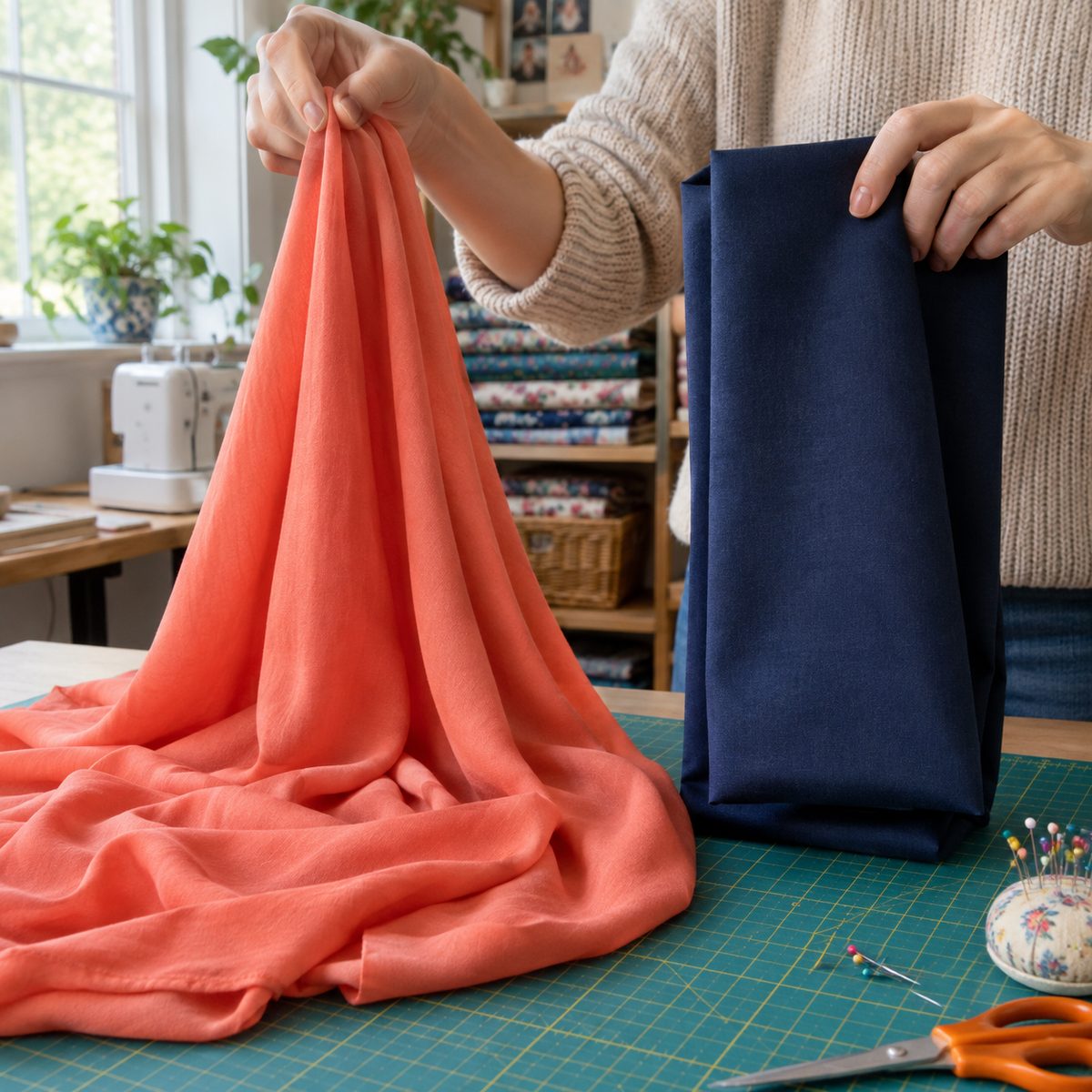
Woven vs. knit fabrics
Nearly every fabric you’ll meet falls into one of two families, and the difference changes how you cut, sew and even which needle you use.
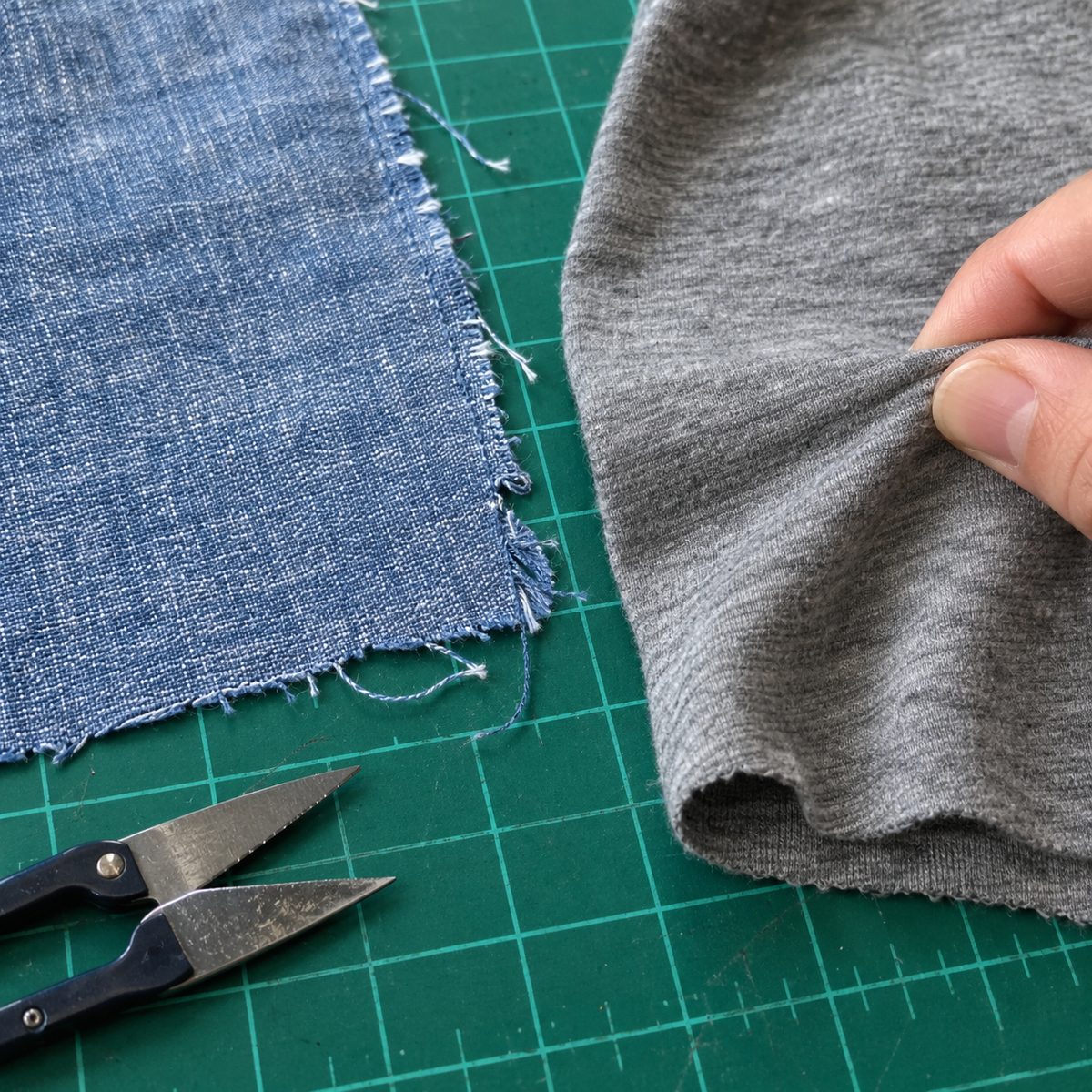
Woven fabrics are made from two sets of threads crossing over and under each other at right angles, like a tiny basket. The lengthwise threads run parallel to the finished edges, called the selvage, and the crosswise threads run from selvage to selvage. Wovens barely stretch along those two directions, though they do give a little on the diagonal (the bias). Cotton poplin, denim, linen, flannel and canvas are all wovens. Their cut edges fray, so seams need finishing, but they feed through the machine predictably, which is why they’re the classic beginner choice.
Knit fabrics are made from one continuous yarn looped into rows, the same way a hand-knit sweater is built, only much finer. Those loops let the fabric stretch, often a lot, and spring back. Jersey, interlock, rib knit and French terry are common knits. They don’t fray, but they can curl at the edges, ripple under the presser foot and stretch out of shape if you tug them while sewing. A ballpoint or stretch needle and a stretch stitch or zigzag help a great deal, and our guide on stabilizing knit fabric covers the tricks that keep seams flat.
To tell them apart in the store, look closely at the cut edge. A woven shows tiny threads poking out that you can pull loose; a knit shows little loops and often rolls toward one side. Then give it a gentle crosswise tug. If it stretches noticeably and recovers, it’s a knit.
Understanding fiber content
Woven or knit describes how the fabric is built. Fiber content describes what it’s built from, and that controls how it feels, breathes, wrinkles, shrinks and presses.
Cotton is the friendliest fiber for learning. It presses beautifully, holds a crease, takes a pin without complaint and is comfortable against skin. It does shrink, sometimes a few percent, and it wrinkles, so it’s worth prewashing. Cotton shows up in everything from lightweight lawn to sturdy canvas, so “100% cotton” alone doesn’t tell you much about how a fabric will behave; the weave and weight matter just as much.
Linen comes from the flax plant and is wonderfully cool and breathable, which makes it a summer favorite. It softens with every wash and has a lovely natural texture. The trade-offs are wrinkles, which many people embrace as part of the look, and a tendency to fray quickly at cut edges. It also shrinks, so wash it before cutting. Linen-cotton blends give you much of the look with a bit less fuss.
Polyester is a synthetic fiber that resists wrinkles and shrinking and holds color well. It’s durable and inexpensive, but it doesn’t breathe like natural fibers, and it can be slippery and springy, so it doesn’t always press flat. Use a cooler iron, since high heat can melt or shine it. Polyester is at its best blended with cotton or used in linings, outerwear and costumes.
Rayon and viscose (two names for closely related fibers made from plant cellulose) have a silky, fluid drape that’s perfect for dresses and blouses. They breathe well and feel cool. They’re also the fabrics most likely to shift while you cut and shrink noticeably in the first wash, so prewash, cut on a single layer, and use plenty of pins or pattern weights. I’d save rayon for a project or two after your first cotton pieces.
Wool is warm, naturally springy and surprisingly easy to shape with steam, which is why tailors love it. Wool flannel, gabardine and melton make lovely skirts, trousers and coats. It generally needs gentle washing or dry cleaning, and it can felt and shrink in hot water, so check the care instructions and plan how you’ll launder the finished piece.
Blends combine fibers to borrow the best of each. Poly-cotton wrinkles less than pure cotton; a little spandex in cotton or rayon adds stretch and recovery; wool blended with a synthetic can be easier to wash. When you see a blend, look at which fiber has the higher percentage, because that one usually sets the overall feel and care needs.
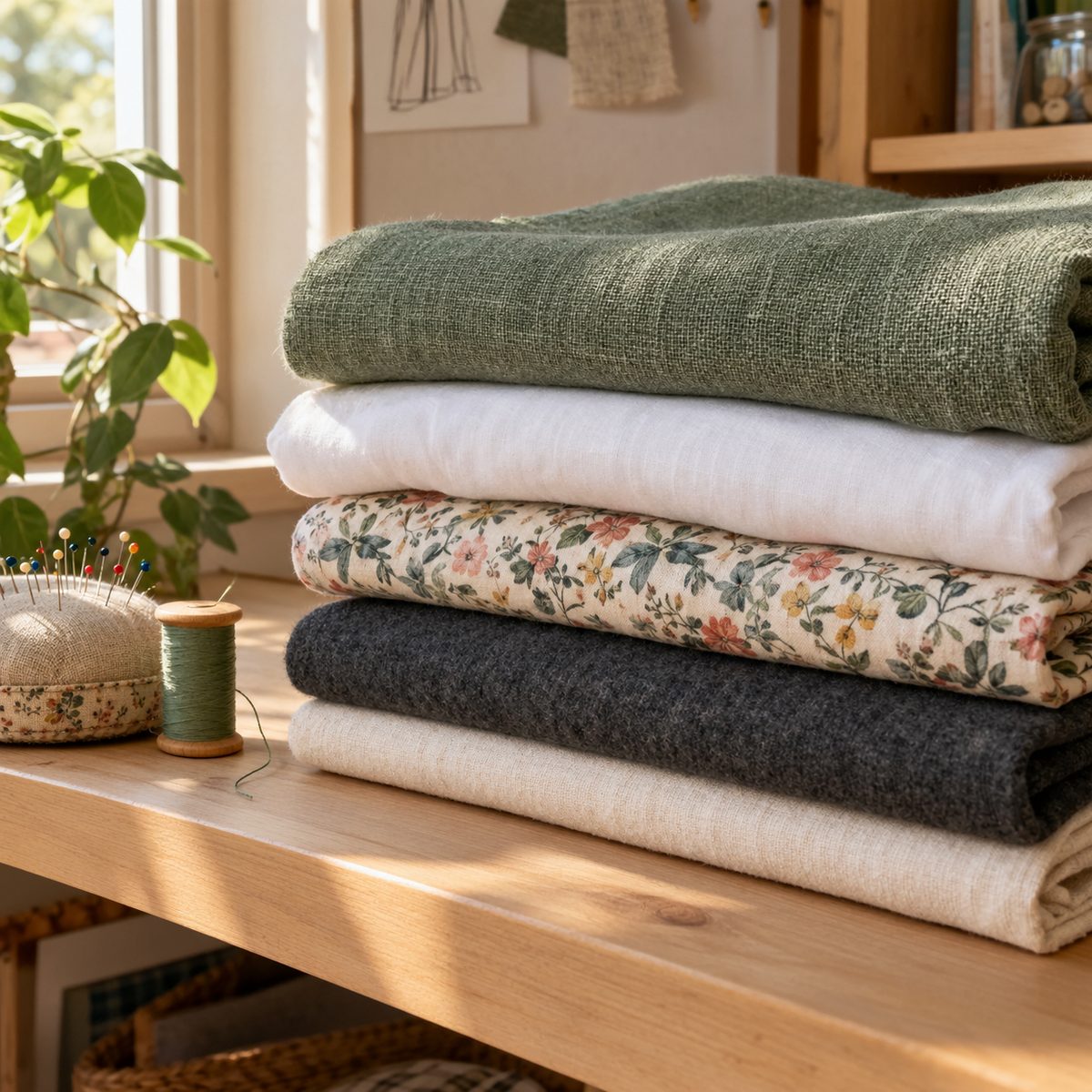
Fabric weight and why it matters
Weight describes how heavy a fabric is for its size, usually listed in ounces per square yard or grams per square meter (GSM). You won’t always see a number on the bolt, but you’ll often see terms like lightweight, midweight or bottomweight, and your hand can tell you a lot.
Lightweight fabrics, such as voile, lawn and chiffon, are airy and often a little sheer. They’re lovely for blouses, linings and summer dresses, but they can pucker at seams and may need a lining or a smaller needle. Medium-weight fabrics, which include quilting cotton, poplin, chambray and most jersey knits, are the sweet spot for beginners: substantial enough to handle easily and light enough for a home machine to sew without strain. Heavyweight fabrics like canvas, denim, twill and upholstery fabric are built for bags, pants, jackets and home decor. They need a larger, sharper needle and sometimes a slower speed over thick seams.
Weight also connects directly to structure. If a tote made from quilting cotton comes out floppy, the answer is either a heavier fabric or adding body with interfacing. Fusible interfacing is the quickest fix, and it lets you keep the print you fell in love with.
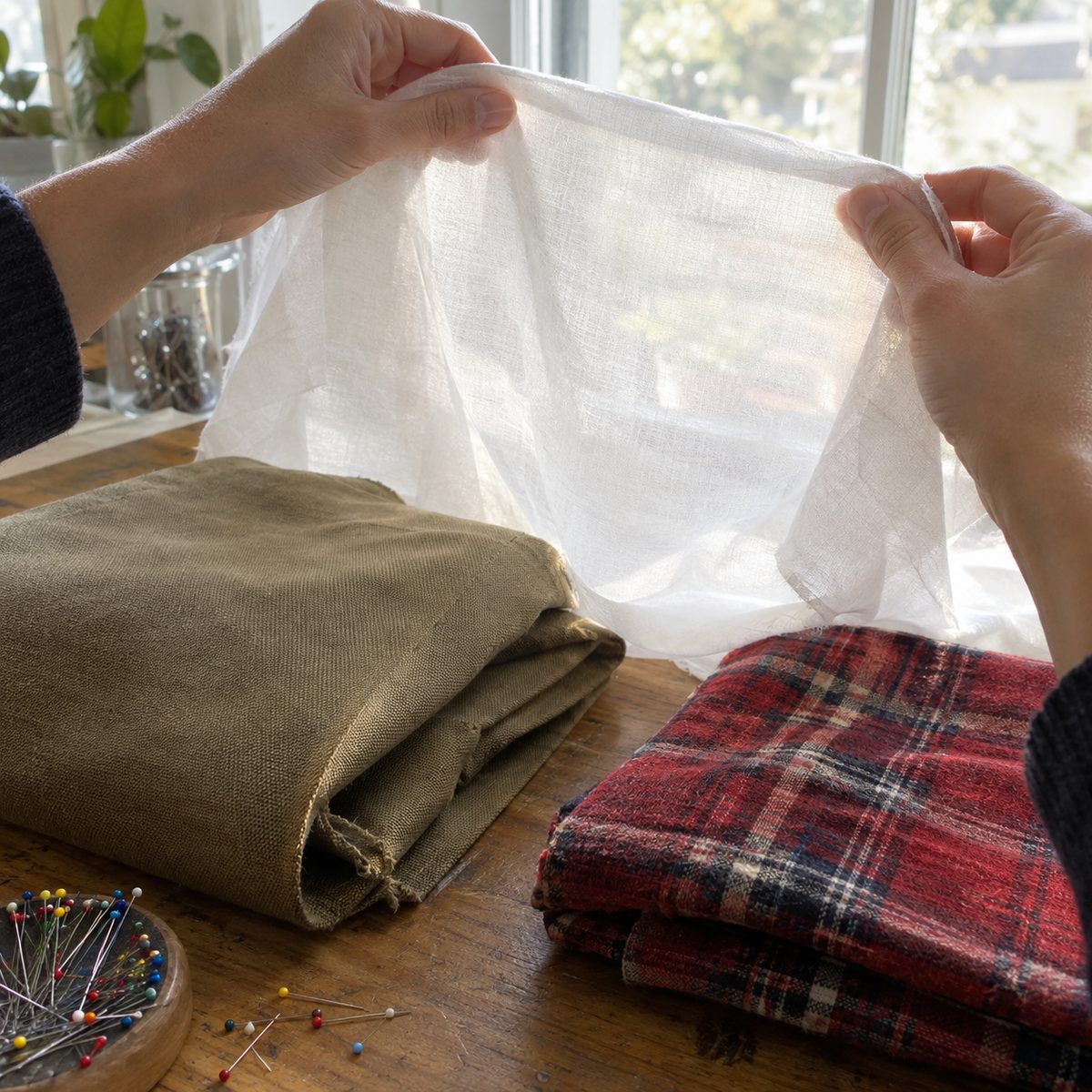
A quick test in the store: pinch a single layer between your fingers and look for your fingertips through it, then drape it over your hand. If it feels similar to the fabric suggested on your pattern, you’re in the right range.
How to read the bolt end
The cardboard end of a fabric bolt is a small cheat sheet, and learning to read it saves you from buying a gorgeous fabric that won’t work. Details vary by store and manufacturer, but you’ll typically find some combination of these:
- Fiber content. Usually given as percentages, such as 100% cotton or 95% rayon, 5% spandex. This is the single most useful line, because it tells you about shrinkage, heat settings and breathability.
- Width. Common widths are 44 to 45 inches for quilting cotton and 54 to 60 inches for many apparel and home decor fabrics. Width changes how much yardage you need, so match it to the chart on your pattern envelope.
- Price per yard. Remember that a wider fabric at a slightly higher price may actually cost less overall, because you’ll need fewer yards.
- Care instructions. Sometimes printed on the bolt as words, sometimes as a code or symbol. Snap a photo with your phone so you remember how to wash it later.
- Fabric name or line. The manufacturer, collection or fabric type, which helps if you need to buy more or match it later.
If the bolt end is missing or vague, ask the cutting counter. Staff can usually tell you what the fabric is, and it’s worth knowing before you commit several yards.
Matching fabric to common beginner projects
Here’s how those qualities come together for the projects most people sew first.
Pillow covers, napkins and simple home decor
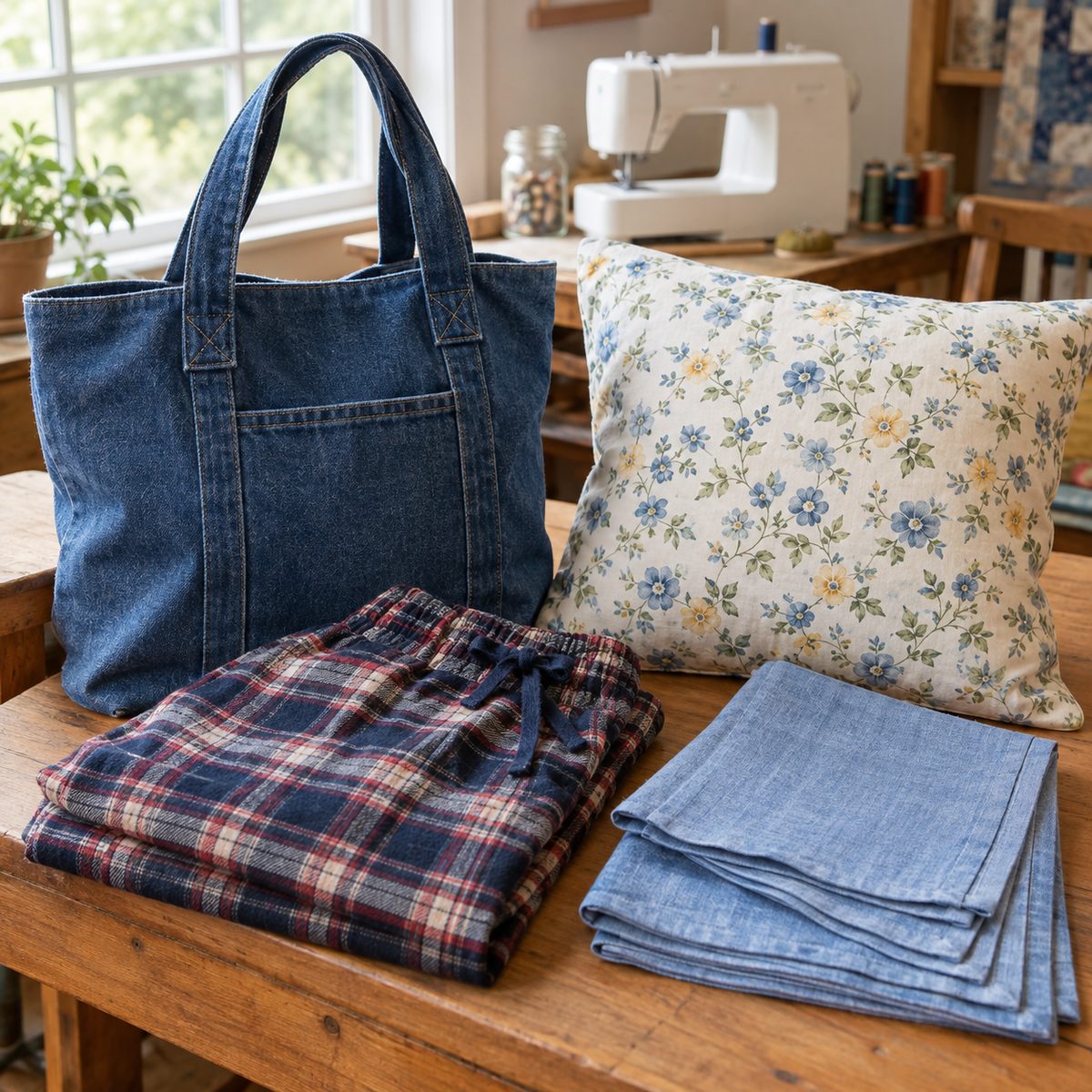
Quilting cotton, cotton canvas or a linen-cotton blend are all excellent. They’re stable, easy to press and come in endless prints. For a pillow that gets a lot of use, a mid-to-heavy canvas or twill wears better than thin quilting cotton. Napkins want something soft and absorbent, so linen, cotton or a blend of the two is ideal.
Tote bags and pouches
Choose canvas, duck cloth, denim or a heavy twill for the outside, and quilting cotton for the lining. If you love a quilting cotton print for the outside, back it with fusible interfacing so the bag stands up. A slightly bigger needle, such as a size 90/14 or 100/16 for heavy layers, makes thick seams much smoother.
Pajama pants and easy skirts
Cotton flannel, cotton lawn, poplin and chambray are comfortable, forgiving and wash well. Flannel is especially cozy for pajamas and hides small wobbles in stitching. For an elastic-waist skirt, a medium cotton with a little drape looks less stiff than quilting cotton.
Aprons and kids’ clothes
Think durability and easy washing. Cotton twill, denim, canvas and sturdy quilting cotton handle spills and frequent laundering. For children’s clothing, soft cotton poplin, flannel and cotton knits are comfortable, and knits are forgiving on fit as kids grow.
A first T-shirt or knit top
When you’re ready to try knits, start with a stable cotton-spandex jersey or interlock rather than a thin, slinky jersey. Look for good recovery: stretch a corner and see whether it snaps back or stays stretched out. Your pattern will list how much stretch it needs, so test the fabric against that before buying.
Shopping tips that save money
Fabric adds up quickly, especially when you’re learning and making mistakes along the way. A few habits keep costs down without sending you home with fabric you can’t use.
- Buy for the practice project, not the dream project. Inexpensive cotton or muslin is perfect for testing a new pattern before you cut into something special.
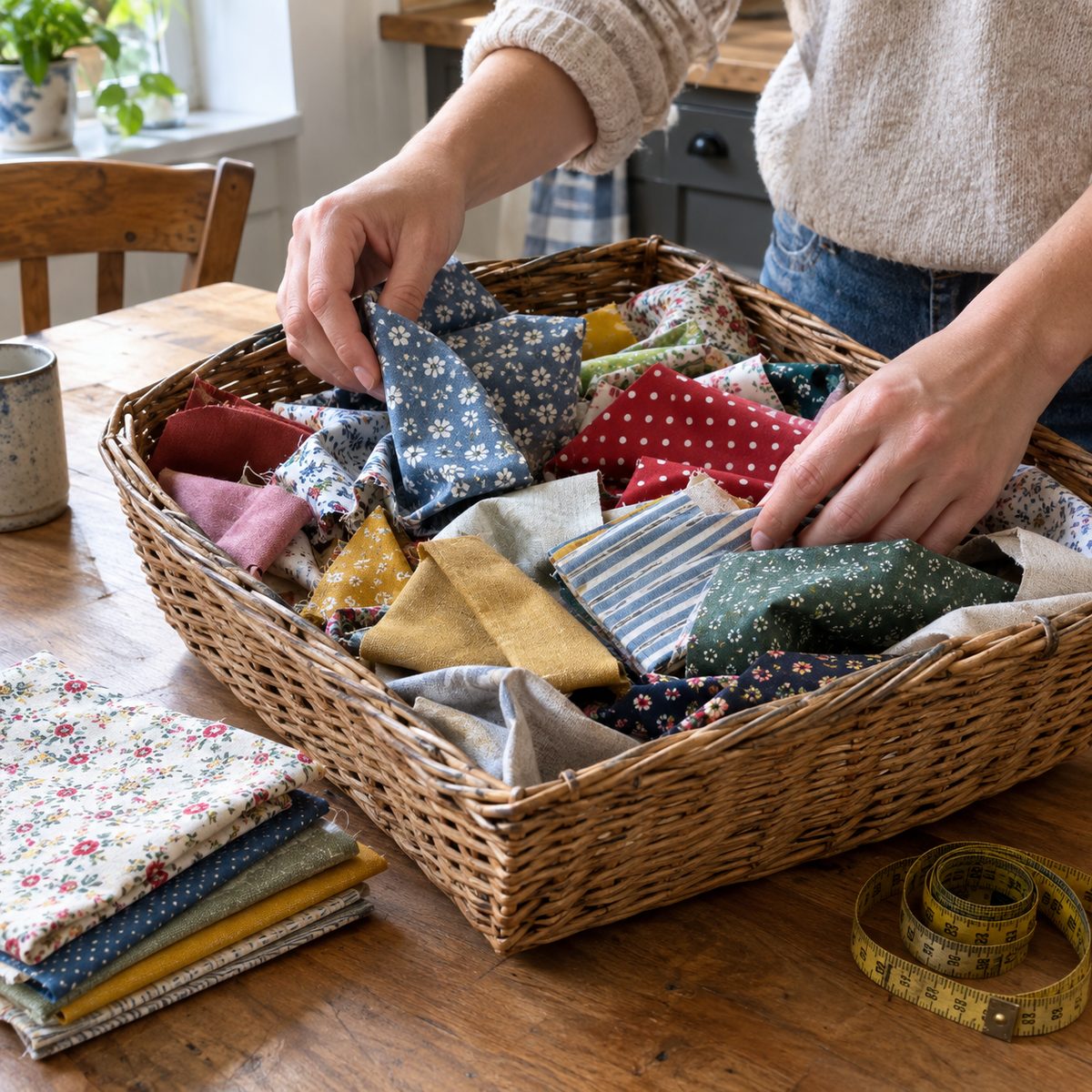
- Check the remnant bin. End-of-bolt pieces are often discounted and are plenty for pillows, pouches, kids’ items and small accessories.
- Calculate yardage before you go. Use the pattern’s chart for your size and the fabric’s width, then add a little extra for shrinkage and matching prints.
- Watch for sales and coupons. Many fabric stores run regular sales, so it pays to stock up on basics like muslin, interfacing and lining fabric then.
- Consider secondhand fabric. Thrift stores, estate sales and old bedsheets or tablecloths can be great sources of cotton and linen for practice and home projects.
- Ask for a swatch. If you’re unsure, a small cut lets you prewash, test press and sew a sample seam before buying several yards.
Once your fabric is home, prewash it the way you plan to wash the finished item. It handles shrinkage and removes finishes that can affect stitching. Our guide on washing fabric before sewing walks through the details for different fibers.
Frequently asked questions
What is the easiest fabric for a beginner to sew?
Medium-weight woven cotton, such as quilting cotton, poplin or chambray, is the easiest place to start. It doesn’t stretch or slip under the presser foot, it presses flat and crisp, and it holds pins well. Mistakes are easy to see and unpick, and a standard universal needle with a straight stitch handles it without any special settings. Once you’re comfortable, cotton flannel and linen blends are natural next steps.
Can I use quilting cotton for clothing?
Yes, but it works best for garments that suit a crisp fabric, like structured skirts, simple tops, kids’ clothes and pajama pants. Quilting cotton has more body and less drape than apparel cottons such as lawn or voile, so flowy styles can look boxy or stiff. If your pattern lists soft or drapey fabrics, choose an apparel cotton or rayon instead.
Should I always prewash fabric?
Prewash anything that will be washed as a finished piece, especially cotton, linen and rayon, which can shrink noticeably. Wash and dry it the way you plan to care for the finished item. Fabrics you’ll never wash, such as some wools meant for dry cleaning or decor pieces, can be steamed instead. Finish raw edges with a zigzag first to limit fraying in the machine.
How do I know if a fabric has enough stretch for my pattern?
Knit patterns usually list a stretch percentage or include a stretch guide. Fold the fabric a few inches from the cut edge, mark a 4-inch span, then gently stretch it crosswise. If 4 inches stretches to 5, that’s about 25% stretch. It should reach the pattern’s number comfortably and then spring back without staying rippled or stretched out.
Choosing fabric really comes down to a handful of questions: does it need to drape or stand up, stretch or stay put, and can it handle the way you’ll wash it? Answer those, read the bolt, and trust your hands in the store. Start with a friendly cotton, build a few projects, and you’ll soon find yourself reaching for new fabrics with confidence. When you’re ready for the next steps, our beginner’s sewing guide is a good companion.