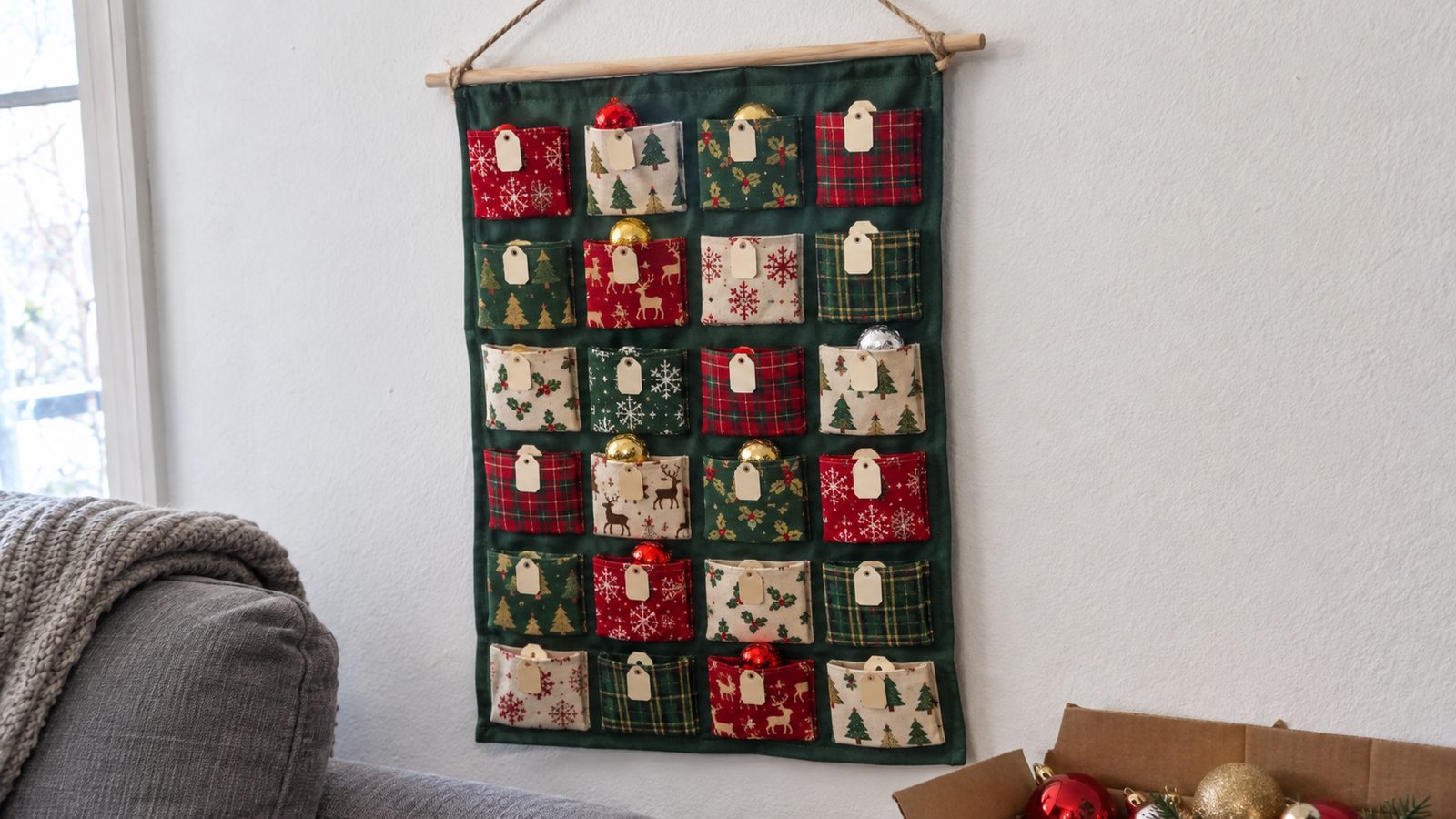
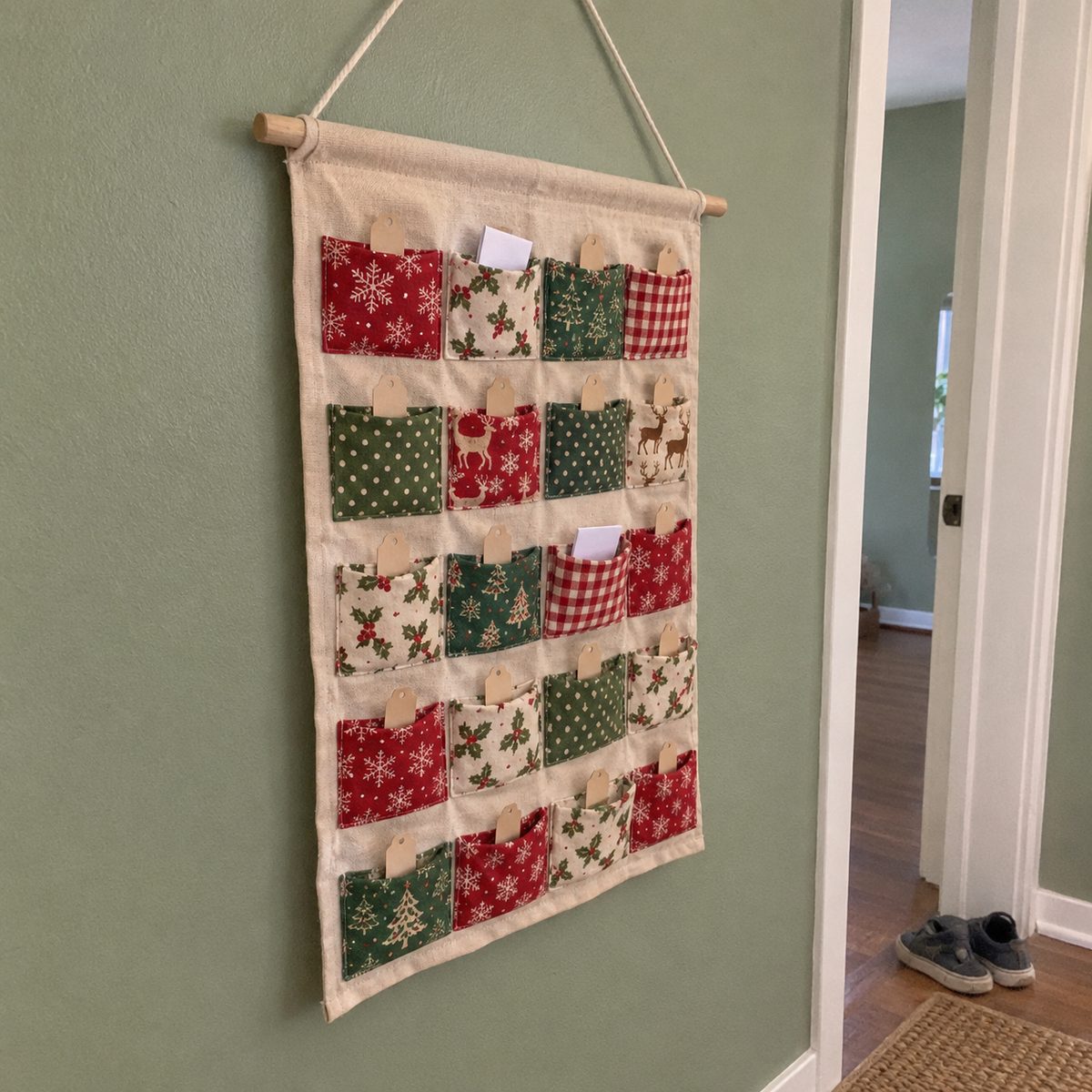
A fabric advent calendar is a hanging panel, about 18 by 24 inches, with 24 small pockets sewn across the front in six rows. Each pocket holds a chocolate, a folded note, or a tiny ornament. On December 26 it rolls up around its dowel and goes in a box until next year.
Plan on about four hours. Half of that is the pockets. Skill level is confident beginner: every seam is straight, but there are a lot of them and each has to land where you marked it.
What makes it come out well is the grid. Mark every pocket line on the fused panel before you sew the first pocket, and the rows stay level all the way down.
What you’ll need
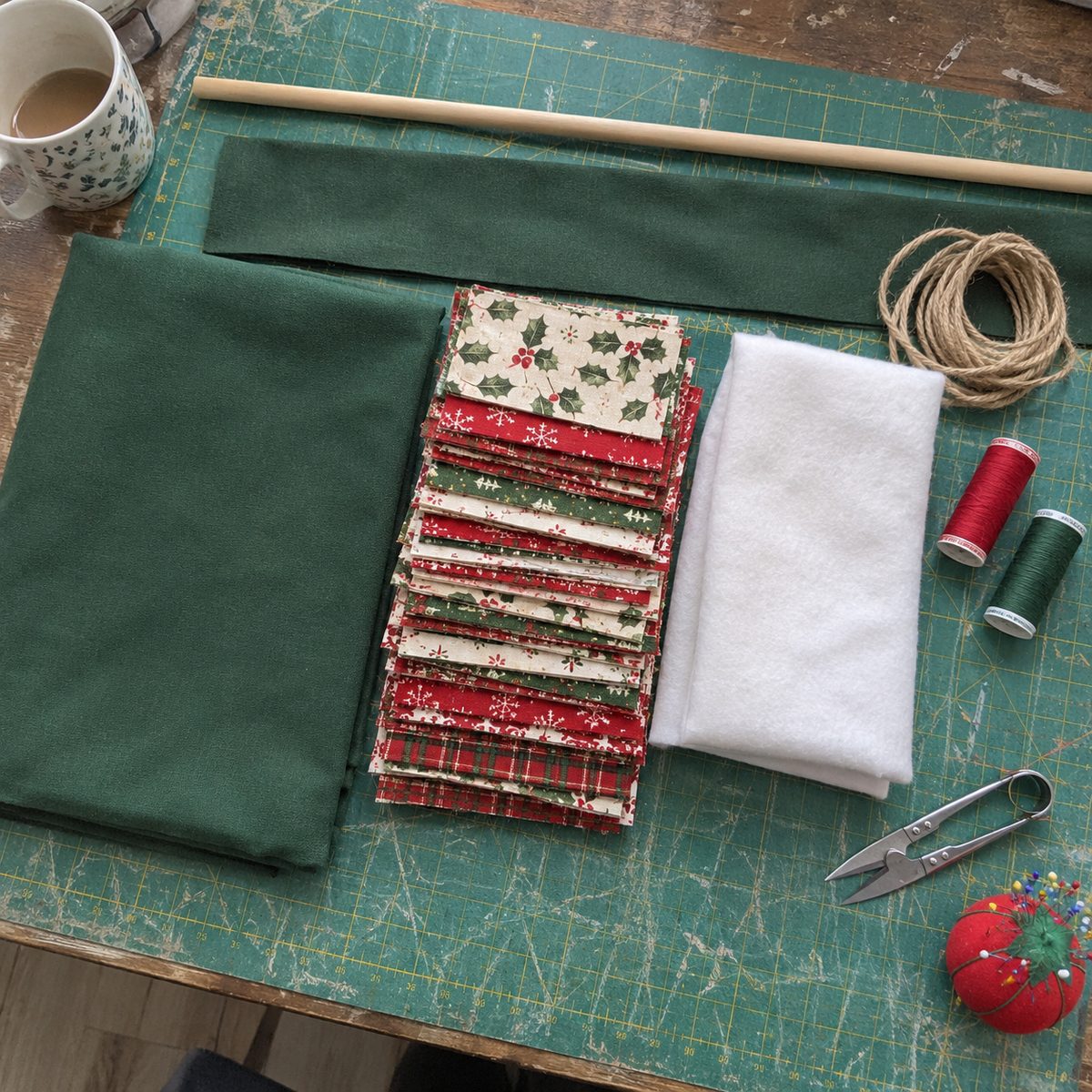
- 3/4 yard of 7 to 10 ounce cotton canvas, 54 inches wide, for the front and dowel sleeve
- 3/4 yard of quilting cotton, 44 inches wide, for the back
- Two fat quarters of Christmas-print quilting cotton for pockets, or 24 scraps at least 4 by 6 1/2 inches
- 3/4 yard of 45 inch fusible fleece (Pellon 987F or similar)
- Two 9 by 12 inch sheets of wool-blend felt, or 1/4 yard of muslin plus a number stamp set and fabric ink
- All-purpose polyester thread to match the canvas and the pockets
- Universal needle 90/14 (100/16 for 10 ounce canvas)
- 3/4 inch wooden dowel, 22 inches long, and 36 inches of jute or cotton cord
- Spray starch, chalk pencil or heat-erasable pen, long ruler, clips, washable glue stick
| Piece | Cut size | Qty |
|---|---|---|
| Front panel, canvas | 19 by 25 inches | 1 |
| Back panel, quilting cotton | 19 by 25 inches | 1 |
| Fusible fleece | 18 by 24 inches | 1 |
| Pocket, quilting cotton | 4 by 6 1/2 inches | 24 |
| Dowel sleeve, canvas | 4 1/2 by 16 inches | 1 |
| Muslin number tag (optional) | 1 1/2 by 2 1/4 inches | 24 |
| Hanging cord | 36 inches | 1 |
Cut sizes include 1/2 inch seam allowances on the panel and 1/4 inch on the pockets. Finished pockets are 3 1/2 inches wide by 3 inches tall, four across and six down.
Fabric, numbers, and prep
The front panel wants body. I use 7 to 10 ounce cotton canvas, the kind sold for tote bags, in natural or deep green. Quilting cotton on the front sags under 24 pockets full of chocolate even with fleece behind it.
The pockets should be quilting cotton. It folds crisp, it comes in every Christmas print, and one fat quarter cuts 12 pockets. This is one of my favorite scrap fabric projects because almost any scrap can give up a 4 by 6 1/2 inch rectangle.
Behind the front goes fusible fleece, not stiff interfacing. Fleece looks padded and lets the panel roll for storage, where craft-weight interfacing creases for good. If you are not sure which product is which, my post on interfacing in sewing sorts out the types.
For numbers you have two honest choices. Felt looks the most traditional, and because felt is a nonwoven fabric, the cut edges never fray. The catch is cutting 39 separate digits, which takes me two hours. Stamped muslin tags take 30 minutes. I switched to tags after my second calendar.
Prewash the canvas and cottons hot and tumble dry. Canvas shrinks 3 to 5 percent, and you do not want that after the pockets are on. Press, then starch the pocket fabric hard, two coats, before cutting. A chalk pencil shows on dark canvas, a heat-erasable pen on natural. Test either on a scrap, since some heat-erasable inks ghost on canvas.
Fuse the fleece and mark the grid
Printed paper advent calendars date to early 1900s Germany. The fabric pocket kind is the same countdown, refilled every year, and the grid is what sells it.
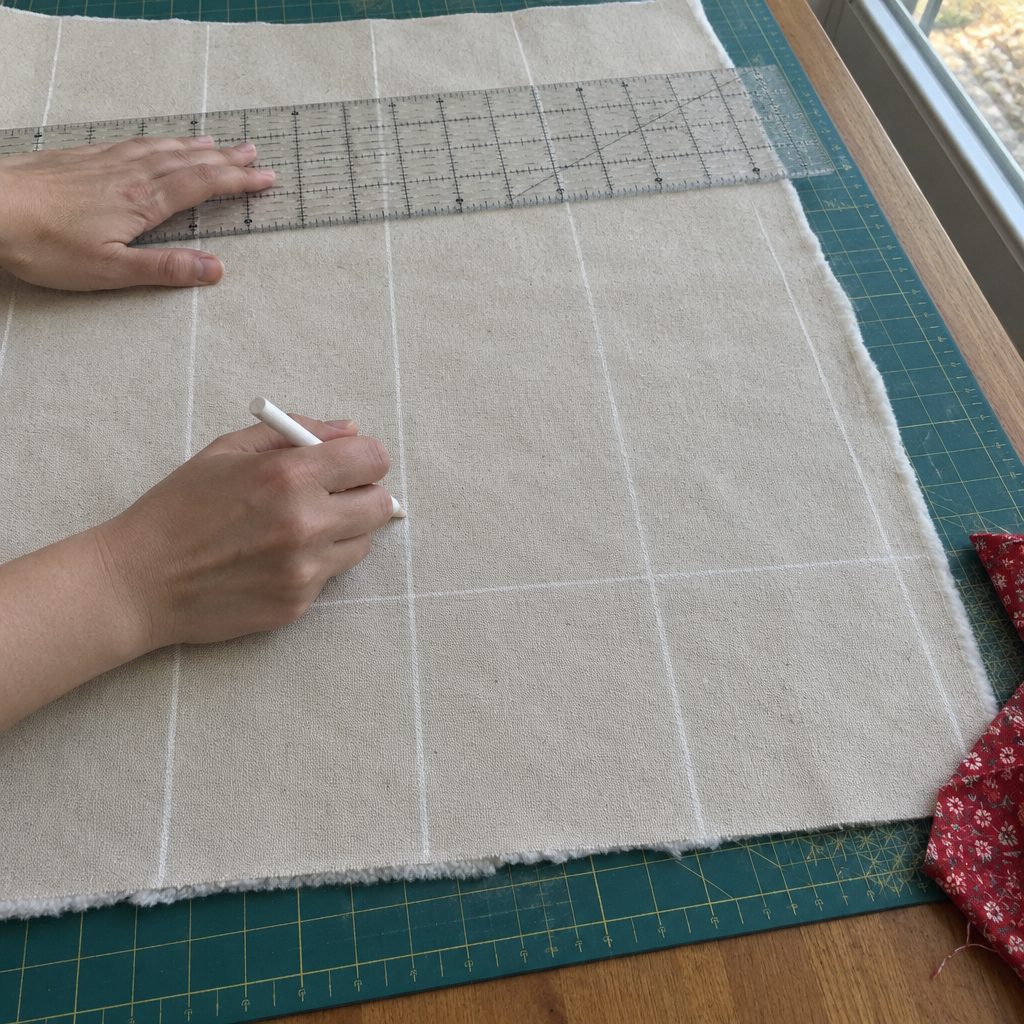
- Center the fleece on the wrong side of the front panel, fusible side down, with 1/2 inch of canvas showing on every side. Fuse with a dry iron on the cotton setting, 10 seconds per spot, from the center out. The panel should feel like a thin quilt with no bubbles.
- Lay the panel right side up and square it. Measuring down from the top raw edge, draw horizontal lines across the full width at 6, 9 1/2, 13, 16 1/2, 20 and 23 1/2 inches. These are the pocket bottoms.
- Measuring from the left raw edge, draw vertical lines at 1 3/4, 5 1/4, 5 3/4, 9 1/4, 9 3/4, 13 1/4, 13 3/4 and 17 1/4 inches. Each pair 3 1/2 inches apart is a pocket column, each 1/2 inch gap is the space between pockets.
- Cut a 3 1/2 by 3 inch card and drop it into a few boxes. It should sit exactly between its lines with 1/2 inch of canvas above it. If the right column sits closer to the edge than the left, the panel was not square. Trim and redraw.
Make the 24 pockets
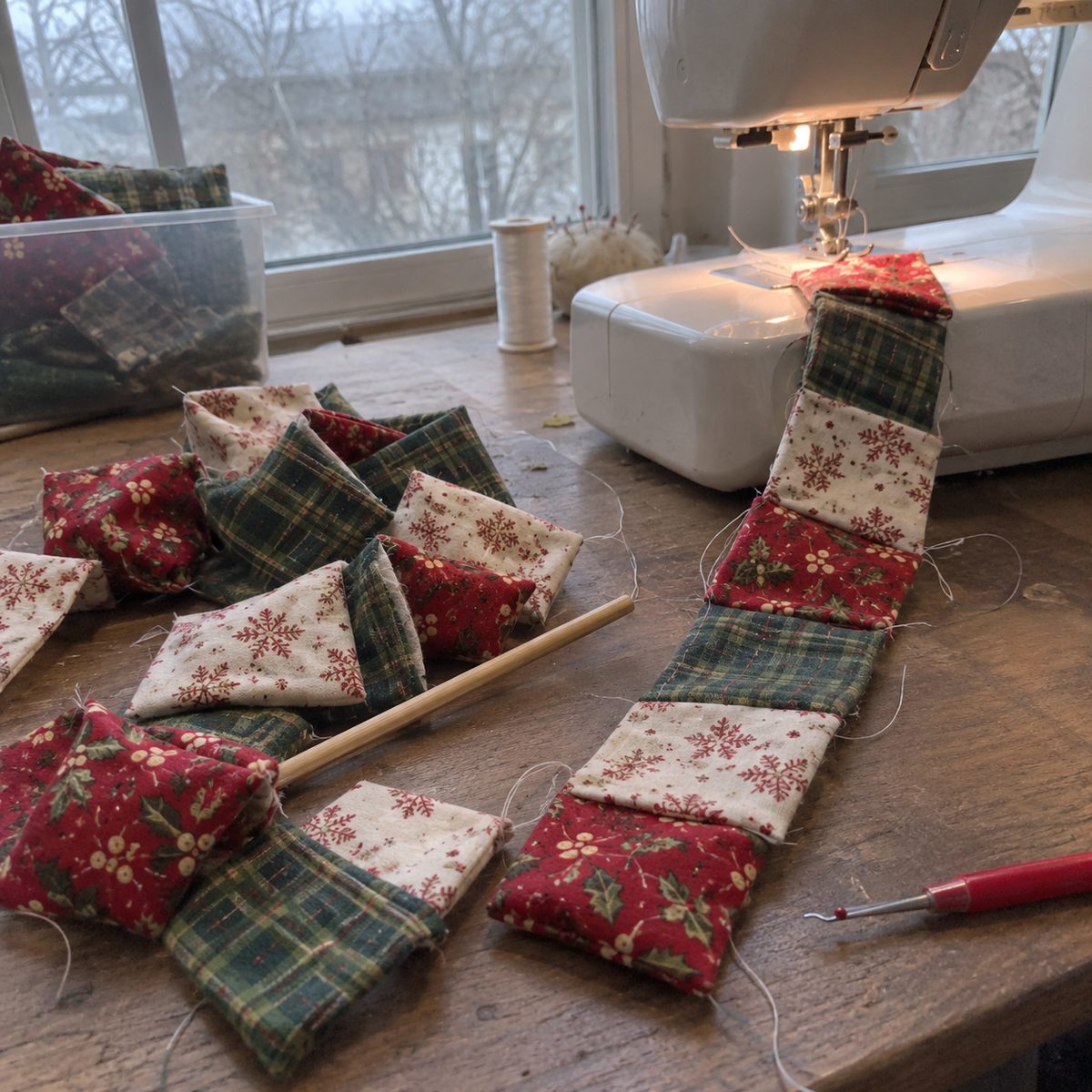
Each pocket is one rectangle folded in half, so the top needs no hem. Chain-piece them, feeding the next one under the needle without cutting thread.
- Fold each 4 by 6 1/2 inch rectangle in half, right sides together, to 4 by 3 1/4 inches with the fold at the top. Press the fold and clip once at each side.
- Stitch both sides at 1/4 inch, stitch length 2.0, backstitching at the fold end only. Leave the 4 inch bottom open. Chain through all 24 and you have a string of little pouches.
- Snip them apart. Clip the top corners diagonally, close to the stitching. Turn each right side out through the open bottom, poke the corners square with a chopstick, and press.
- Measure a few. Anything wider than 3 5/8 inches was sewn under 1/4 inch and will not fit its column, so resew that side. Anything under 3 3/8 can stay; a narrow pocket hides in the gap.
Add the numbers
Numbers go on before the pockets go on the panel. Stitching through a loose 4 inch pocket is easy. Through one already sewn to fleece-backed canvas, it is not.
- For felt, print the digits 1 through 24 about 1 1/4 inches tall in a plain bold font, cut them out, flip them, and trace onto the felt so the marker ends up on the back. Cut with small sharp scissors.
- Glue-baste each number centered 1/2 inch below the fold and let it dry 10 minutes. Stitch around it 1/16 inch inside the edge, straight stitch at length 2.5, matching thread. The felt should lie flat with no ripples. My post on sewing felt on a regular machine has the needle and tension settings.
- For tags, press all four edges of each muslin rectangle under 1/4 inch, stamp a number with permanent fabric ink, and heat set 20 seconds with a dry iron. Center a tag 1/2 inch below each fold and stitch around it 1/8 inch from the edge.
- Lay the pockets out 1 through 24, six rows of four, reading like a book. Shuffle until no two matching prints touch.
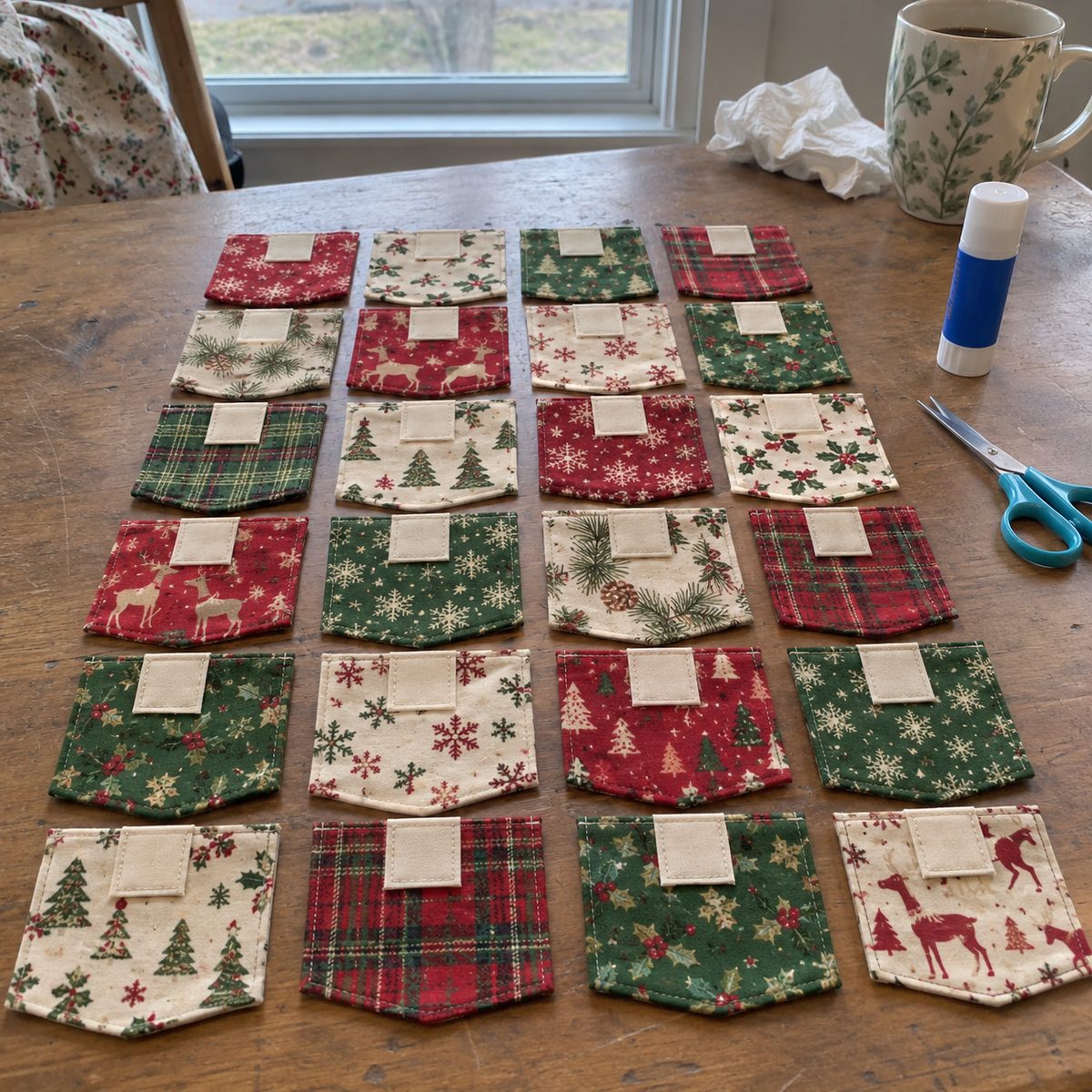
Sew the pockets to the panel
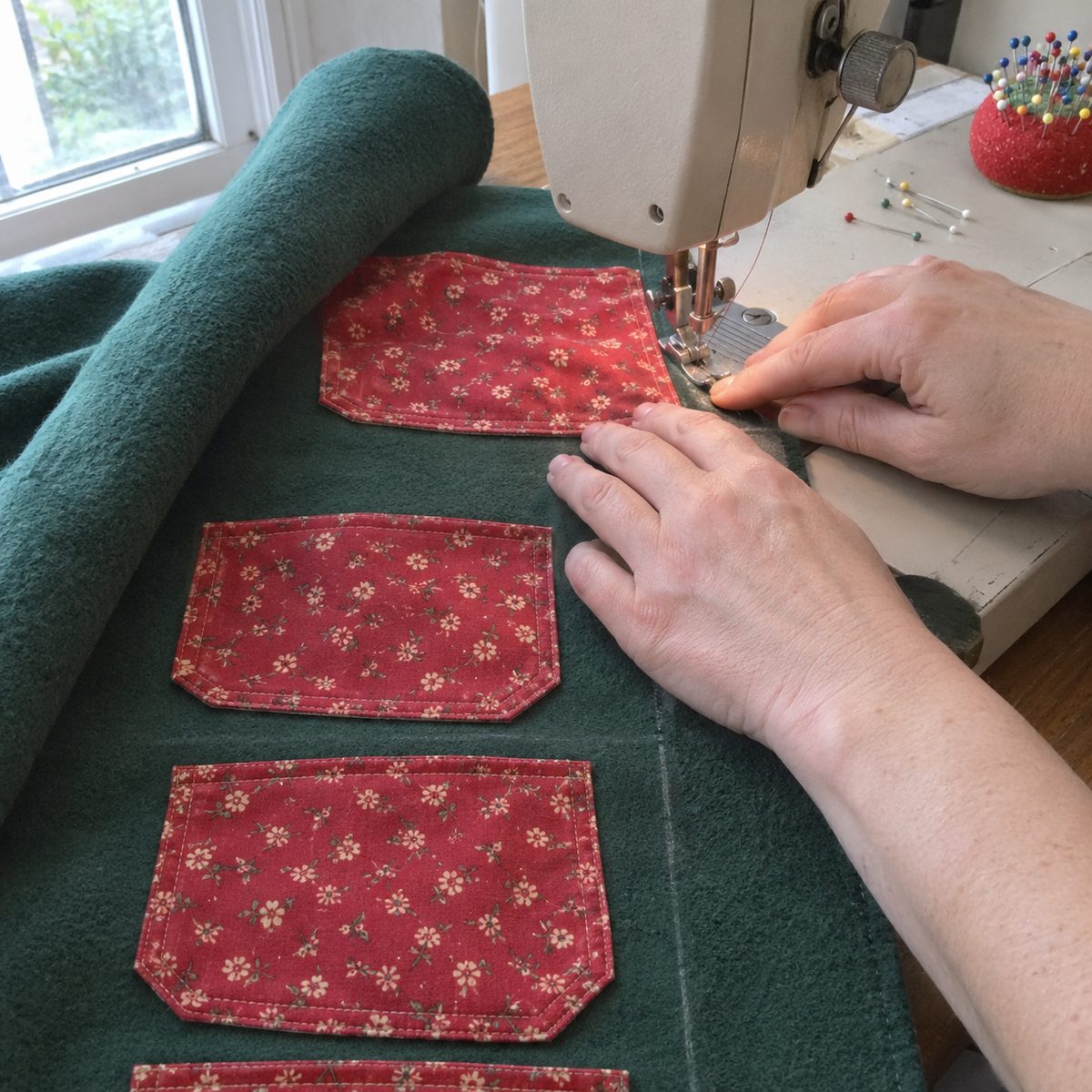
The pockets go on upside down first, then flip up, which buries the raw bottom edge. Switch to the 90/14 needle and a 3.0 stitch length for everything through canvas and fleece.
- Start with pocket 21, bottom left. Lay it face down and upside down on the panel, fold pointing toward the bottom, raw edge 1/4 inch below the 23 1/2 inch line, sides between the column lines. Pin both corners.
- Stitch across exactly on the drawn line, backstitching at both ends. Flip the pocket up over the seam and press. It should sit between its column lines with the fold 3 inches above the line.
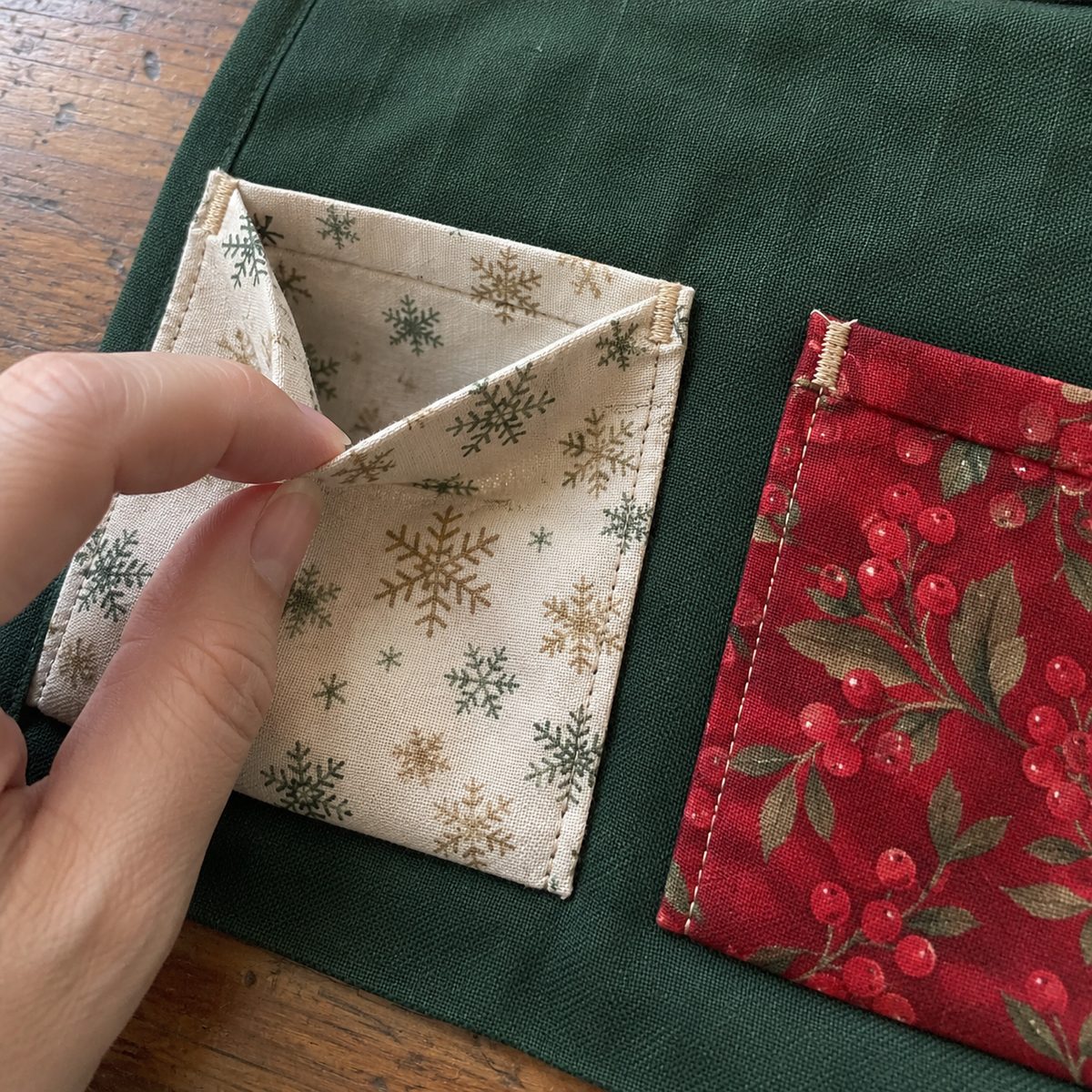
- Edgestitch each side 1/8 inch from the edge, fold to bottom seam. Reinforce each upper corner with a 1/4 inch bar of backstitches. That corner is where fingers pull.
- Repeat across the row, then move up a row. Bottom row first means the heavy end feeds out behind the needle instead of bunching in front of it. Six rows takes about 90 minutes.
- Turn the panel over. The back is a mess of stitching lines and that is fine. The back panel covers all of them.
Back, dowel sleeve, and cord
The sleeve is sewn into the top seam, so nothing gets stitched through the front after the pockets are on. The back goes together pillowcase style.
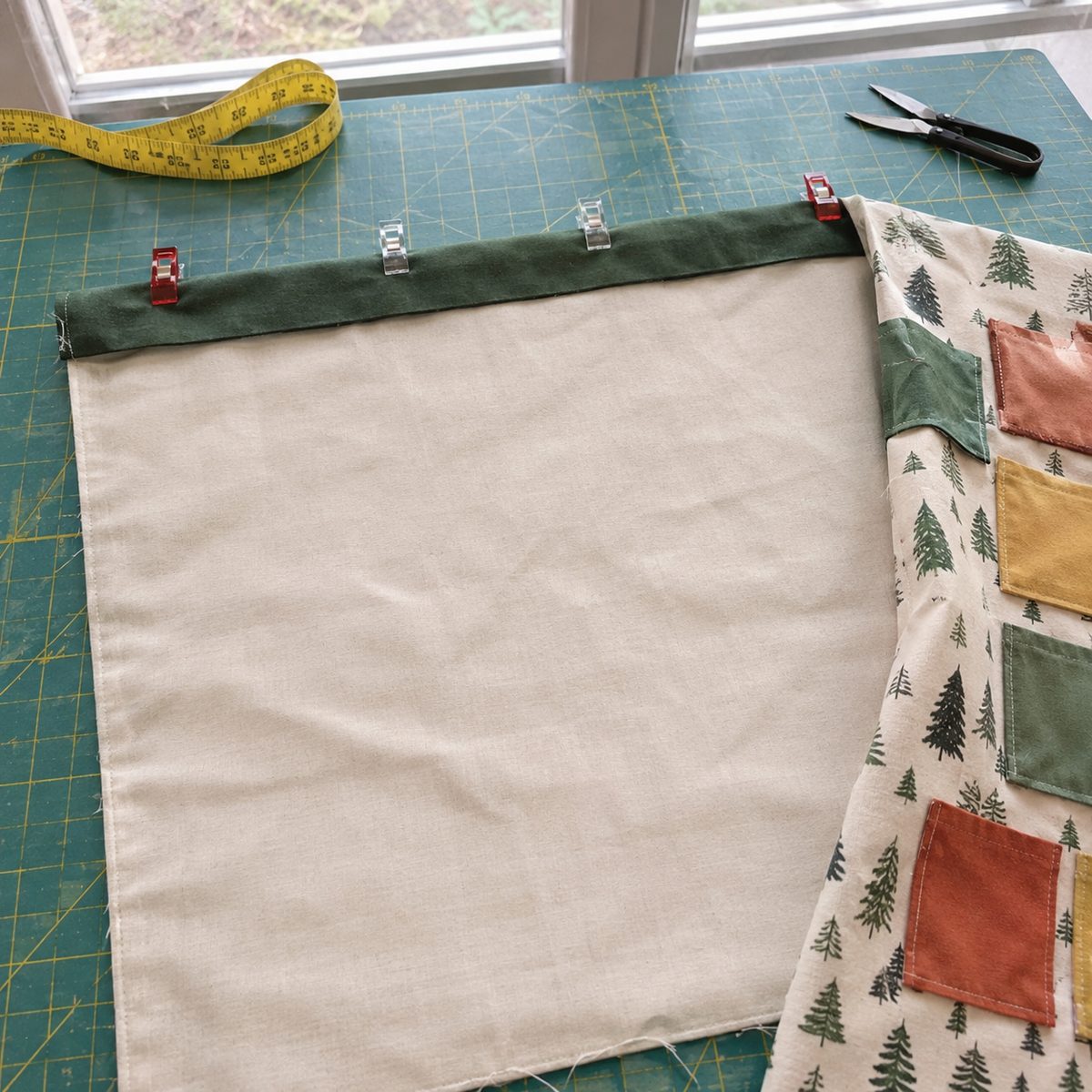
- Hem both short ends of the sleeve strip with a double 1/4 inch fold. Fold the strip in half lengthwise, wrong sides together, to 2 1/4 by 15 inches, and press. That fold becomes the bottom of the sleeve.
- Lay the back panel right side up. Center the folded sleeve along the top edge, raw edges even, fold pointing down into the panel. Hold it with a basting stitch at length 4.0, 1/4 inch from the edge.
- Place the front face down on top, right sides together, sandwiching the sleeve. Stitch at 1/2 inch, length 3.0, pivoting at the corners and leaving an 8 inch opening along the bottom. Go slow across the top, where you are through four layers of canvas plus fleece.
- Trim the corners. Turn right side out through the opening, push the corners square, and press from the back so the iron never sits on the pockets. Turn the opening edges in 1/2 inch.
- Topstitch 1/4 inch from the edge all the way around, closing the opening as you go. The sleeve should now hang as a 1 3/4 inch deep channel on the back, open at both ends.
- Slide the dowel through. Tie the cord to each end with a double knot 1/2 inch in from the tip and dab the knots with white glue. Hung and filled, the panel should sit plumb with flat bottom corners.
Fixes for the things that go wrong
The pocket rows run uphill
Either the panel was not square when you drew the grid, or a pocket was stitched beside its line instead of on it. Measure every horizontal line from the same top edge, never from the line above. A 1/8 inch wobble disappears when the pockets are full. A 1/4 inch one does not, so unpick that pocket and redo it.
The pockets flop forward and show their insides
Pockets should bow open a little so a hand gets in. If they fall forward, the pocket fabric was not starched or the panel is too soft. Starch the finished pockets and press them against the panel. On a soft panel, add a second bar tack 1/2 inch in from each upper corner.
The felt numbers pucker the pocket
The stitch was too short or the felt stretched while you glued it. Use length 2.5 to 3.0 and lighten the presser foot pressure. If the machine still drags the felt, stitch through a scrap of tissue paper and tear it away. Steam a puckered number from the back, face down on a towel.
The dowel will not go through the sleeve
The sleeve flipped up while you pinned the front on, and the seam went through its fold. Unpick the top seam between the sleeve ends only, pull the sleeve back down, and resew. A 3/4 inch dowel passes through a 1 3/4 inch channel with room to spare, so a jam means something is sewn shut.
Variations and batch sewing
A 12 pocket version suits a small wall or a twelve days of Christmas countdown. Make it 13 by 16 inches finished, three columns of four, same pocket, 3/4 inch side margins. Cut the front and back 14 by 17 and the fleece 13 by 16.
Fabric swaps change the whole mood. Natural canvas with six low-volume prints reads modern. Dark green canvas with 24 different reds is the one everybody asks about. Red ticking stripe with plain white pockets looks like an old kitchen towel, and I mean that as a compliment.
For a gift version, fill it before you wrap it. Adults get tea bags, folded recipes, a lottery ticket. A baby’s first Christmas calendar holds socks, hair bows and a rolled bib. To sew three for the family, cut all 72 pockets in one evening, chain-piece them in one sitting, and keep each calendar’s pockets in its own zip bag in order.
Frequently asked questions
What fits in a 3 1/2 by 3 inch pocket?
A foil-wrapped chocolate or two, a folded slip of paper with a joke or an activity, a small toy car, a hair tie, a tea bag, half a candy cane. Flat things slide in easiest. For a child under three, skip anything smaller than about 1 1/4 inches and use a rolled sock or a folded picture instead.
Can I sew a fabric advent calendar by hand?
Yes, with a backstitch and a lot of evenings. The pockets are the slow part: 24 pockets with two side seams each is 144 inches of backstitching before you sew any of them down. Figure 10 to 12 hours. Keep stitches about 1/8 inch and use a sharps needle with a single strand of all-purpose thread.
How do I store it between Christmases?
Empty every pocket, crumbs included. Leave the dowel in and roll the calendar loosely around it, pockets out, so nothing creases. Wrap it in an old pillowcase rather than plastic and keep it in a closet, not an attic, where summer heat can soften the fusible. Unroll it a day before hanging and press from the back.
Once the first calendar is hanging, the pocket grid stops looking like math and starts looking like a template for anything with rows. It is the biggest project in my Christmas sewing projects roundup and the one that gets refilled every December.